Bulgarian labour legislation is comparable to European, and prescribes 20 days of vacation per year (I think). Someone is not honest here.... either this woman or her employer.
Tuesday, August 25, 2009
Social justice
Casual conversation between with me and the woman who cleans the stairs outside our office:


Monday, August 24, 2009
Concordia - A Social center in Sofia
Concordia is an Austrian social project, active in Bulgaria since the winter 2008/09. The foundation also works in Romania since 1991, and Moldova since 2003. The Concordia center in Sofia hosts about 87 inmates, all under 18. The staff are Austrians, Bulgarian employees, and volunteers. The inmates get food, housing and counselling. The center also works with homeless people living in the streets, offering food, and welcoming lunch guest if there is food left after the imates ate. Many clients are drug addicts, but no drugs are allowed in the center.
I spoke some words about their work with Sabine, one of the Austrian staff who has been working in Sofia since this summer, and by now by far outshines me in Bulgarian. She tells me she loves the Bulgarian nature, but finds that society, especially the bureacracy has kept many communistic sides. But the biggest impression is probably the great differences - poverty next to luxury.
 A table tennis game at Concordia
Concordia is a Jesuit movement, and Sabine reassures that the social work gets a different depth when it is based on the spiritual believes. But she tells me that Bulgaria strikes her as a "very secular" country. Especially elder people surpise her with not knowing about religion. "We do have a morning service, and I wouldn't say that it attracts the masses. But it seems like those who come are happy about it." Concordia does not cooperate with other churches i Sofia, orthodox or protestant. Sabine says that it will take time to build up that kind of relationships and that Concordia try to be modest in stating their spirituality.
What about the EU? Does the membership bring any improvement to the poorest Bulgarians? Maybe. Maybe a little. The EU membership forces Bulgaria to modernize in a number of ways, and with the membership comes foreign investment, creating jobs. But in Concordia's daily work the differents are slight. Concordia is also not reliant on any funding from the European Union, only private donors.
Concordia's website: http://www.concordia.co.at
Saturday, August 22, 2009
The Swedish Radio comments on Belarus decision

I wrote an email asking the Swedish Radio why the sendings in Belarussian lanuage will be discontinued, if and which other programs would be discontinued.
Ingemar Löfgren, editor of Sveriges Radio International and responsible is currently on vacation, but his motivtion was forwarded to me by his staff. (It is thus not an answer to my question)
This is my translation, full Swedish text is below.
"There are many reasons why I, being editor in chief of SR international, think that the broadcasting shóuld be discontinued: All business, no mather in which company, must continously be reviewed.. Do we really get what we want, regarding the resources we invest? When it comes to our Belarussian offering the effect is not easy to measure - in spite of a splendid editorial work. The only thing one can say is that the Belarussian website has around 500 visitors per month and that the Short-/Middlewave-sendings of 2*30 min per week not always reach the listeners. The Belarussian sendings were started as a pilot projet in 2004 on short - and middlewave. In other words, it is a business we have taken on ourselves and we ourselves are the only one to decide wether to continue or not. With the backdrop of constantly reviewing the full offering in comparison to our resources , I have chosen to discontinue the Belarussian offering. My ambition is purey to put our meager resources where they are most usefull journalistically. What is journalistically useful is of course a topic of discussion, and I have the greatest respect for radio listeners and web site readers that guard "their own" languages. The problem is that you can not do everything for everyone - always. As the responsible editor in chief I have therefore decided to prioritize other businesses within SR International than the Belarussian specifically.
Kind Regards
Ingemar Löfgren
Swedish text:
"Det finns flera anledningar till varför jag, som redaktionschef för SR International, anser att sändningarna ska upphöra: All verksamhet, oavsett företag, måste alltid ses över. Får vi verkligen ut det vi vill ha för de resurser vi lägger ned? När det gäller vårt vitryska utbud så är effekten inte helt lätt att mäta - trots ett mycket gott redaktionellt arbete. Det enda man kan säga är att den vitryska webben har cirka 500 besök i månaden och att KV/MV-sändningarna på två halvtimmar i veckan inte alltid når adressaterna. De vitryska sändningarna startades som ett försöksprojekt år 2004 på kort- och mellanvåg. Det är med andra ord en självpåtagen verksamhet och det är upp till oss själva att avgöra om experimentet ska fortsätta eller inte. Mot bakgrund av att jag ständigt måste se över hela utbudet i förhållande till våra resurser, har jag valt att lägga ned det vitryska utbudet. Min ambition är helt enkelt att försöka lägga våra knappa resurser där de gör mest journalistisk nytta. Vad som är journalistisk nytta kan naturligtvis alltid diskuteras och jag har stor förståelse för radiolyssnare och webbläsare som värnar om just "sina" språk. Men problemet är att man inte kan göra allting för alla - alltid. Som ansvarig redaktionschef har jag därför beslutat att prioritera andra verksamheter inom SR International än just den vitryska. Med vänlig hälsning Ingemar Löfgren
Source: email conversation between me and Sveriges Radio, 18 Aug 2009
SR's sendings in Belarussian
Friday, August 21, 2009
Violence against roma in Romania
In an earlier post I pondered over the fact that violence against roma minorities seemed to be a on the rise in comparatively well-developed central Europe than in poor southeastern Europe. unfortunately I was not right.
Cotidianul reports in a long well written feature article how the Hungarian population in Hargitha attacked their roma neighbours armed with clubs, axes and spades. Unfortunately no one died this time. Hopefully no one will.
Hargitha is a village in the transylvanian part of Romania. it is populated with hungarians, romanians and roma. Of course all groups have a list of complaints about the other. But it is the roma that get hunted with clubs. Society should not try to place blame, but prevent any kind of violence.
Cotidianul reports in a long well written feature article how the Hungarian population in Hargitha attacked their roma neighbours armed with clubs, axes and spades. Unfortunately no one died this time. Hopefully no one will.
Hargitha is a village in the transylvanian part of Romania. it is populated with hungarians, romanians and roma. Of course all groups have a list of complaints about the other. But it is the roma that get hunted with clubs. Society should not try to place blame, but prevent any kind of violence.
Tuesday, August 18, 2009
Boom
I live in Sofia. Every morning I leave my girlfriends flat in the asolute center and take the tram to the neighbouring Pliska district, an office district, still kind of central.

Sofia is booming,and has been so constantly since I came here. Building projects are everywhere. It is not difficult to understand why - still most people live in sadly underisolated communist block houses, that would be perfectly square if they were properly built, which they are not. With a major remont these flats can be made to rather cosy homes, and obviously there is a huge interest in DIY shops in this part of Europe, an interest that most likely has contributed to IKEA'Ss brilliant sales in Romania. Bulgarians are still waiting for their IKEA, and it would be here today if it wasn't for the financial crisis.
Crisis isn't exactly the first thing that comes to your ming when you see his frenetical building spree. But what if the whole thing is real? What if people like Michael J. Panzer are true - their thesis being that we are still far from any bottom, and the different bailout programs are like taking painkillers against a broken leg and keep walking. Everybody knows that building projects are a favourite mean of money washing world wide, so also in Bulgaria. So maybe the real economy is not so important as it looks on the paper... but still.
I sometimes have the feeling that these emerging economies are bubbles that might burst. Next to my girlfriend's flat Serdika center is now being built, promising to be the biggest shopping mall on the Balkan peninsula.

In a city that already has (at least three) shopping malls, and an average income of 200 EUR per month.In a country whith a GNP ten times smaller than in Sweden,where a three room flat have roughly the same price. Milk and clothing as well. Cars are more expensive than in Sweden - yet the streets of Sofia are completely crowded with them. Who buys this? Where do the money come from?

Economists warn that commercial real estate, like Serdika center will be the next collapsing market. If unemployments increases, or stablilizes on higher than now levels, consumers will probably not spend so much as they were calculated to spend. If they don't do it in the states, they will stop doing it in Bulgaria also, eventually.
Noone knows. In fact, never before has Bulgaria been an integrated part in a crising world economy, so how could we know? On my way I see some nice house, deeply necessary.

But I am never far from abandoned building projects like these... memento mori.

Sofia is so much. We can speculate as much as we will. But in the end Sofia, like any city, is nothing but a snapshot of human life.

Friday, August 14, 2009
Should the Internet be regulated?
I was quite surprised, actually, to see this question answered with a hesitant yes in the Romanian blog Intelectual. Bloggers, especially young such, tend to safeguard the Internet as a non-regulated place vithout surveillance.
Intelectual points out what everybody already knows - that the internet is not only the place for intelectual discussions. It is also the place where child pornography is spread, political opponents are harrassed, and all the evils of the modern world are efficiently broadcasted . His text also makes a point that blogs in Romania often serve poitical interests, politicians pay bloggers to write things about opponents that they could never say themselves on TV
For this reason, legislators all over the world are trying to find ways to control the content of the internet. The web guru Tim O'Reilly have posted a draft code of conduct for bloggers (see below) as a way to regulate the discussion without state intervention, but Intelectual doesn't seem to think that this is enough. "Whether we want it or not, a "lex digitalis" is underway, similar to the "lex mercatoria" that regulates the market of goods.(my translation)" Intelectual sees the ultimate responsibility in ICANN (International Corporation for Assigned Names and Numbers)- the organisation that gives out top level adresses, etc.
Not everyone is happy about a regulated internet, though. Intelectual mentions the Swedish Pirate Party that reached the Euoropean Parliament on vowing to defend the indivdual against surveillance, and similar movements in all west European countries.
Given my superficial knowledge about Balkan blogging, I do not believe that this is an issue that is restricted to western Europe. The Freedom Not Fear day will be celebrated also in Sofia, like last year, and internet privacy has been a major theme on Bulgaria e nasha in the discussion about surveillance.
I also think that Intelectual underestimates the risks of allowing the internet to be regulated. States like China, Iran and Moldova have all been more or less succesful in curbing the free exchange of ideas, without in anyway diminishing the criminal/immoral content on the internet
I am much more attracted to O'Rielly's idea of a code of conduct for internet use, than legislation. Nonetheless - Intelectual was an interesing read... because it was quite different from the "mainstream" bloggosphere writing.
Dear readers... what are your opinions on this issue? Do you think that a code of conduct could actually work, or should there be no codes of conduct?
O'Rielly's Code of conduct:(shortened)
1. We take responsibility for our own words and for the comments we allow on our blog.
We are committed to the "Civility Enforced" standard: we will not post unacceptable content, and we'll delete comments that contain it.
We define unacceptable content as anything included or linked to that:
- is being used to abuse, harass, stalk, or threaten others
- is libelous, knowingly false, ad-hominem, or misrepresents another person,
- infringes upon a copyright or trademark
- violates an obligation of confidentiality
- violates the privacy of others
We define and determine what is "unacceptable content" on a case-by-case basis, and our definitions are not limited to this list. If we delete a comment or link, we will say so and explain why. [We reserve the right to change these standards at any time with no notice.]
2. We won't say anything online that we wouldn't say in person.
3. We connect privately before we respond publicly.
4. When we believe someone is unfairly attacking another, we take action.
5. We do not allow anonymous comments.
6. We ignore the trolls.

Wednesday, August 12, 2009
The Swedish Radio and Belarus
Sveriges Radio - the Swedish public broadcasting company has decided to close its sendings in Belarussian. These sendings were a kind of "Radio Free Europe" in the dicactorship Belarus . The Swedish students' group Liberala Studenter have launched an online petition, askin Sveriges Radio to keep the broadcast as a way to support democracy work in Belarus. I was made aware of the topic from posting on the Central europe mailing list. Since it is a public mailing list I take the freedom that publish the entire letter from Sławomir Wójcik here.
Posted by: "Sławomir Wójcik" swojcik@pk.org.pl slawek.wojcik
Sat Aug 8, 2009 3:45 am (PDT)
Protest against Swedish Radio International - who are closing down the
belarusian radioprogramme which had listeners in Belarus (in
belarusian) and promoted the democratic society. The chief of SRI
Ingemar Löfgren says "democracy projects is not our job" - but the
thing is - Swedish Radio is Public Servise and it SHOULD promote
democracy aswell. Please help us support this protest and sign this
petition!
In swedish: Namninsamling startad - protest mot Sveriges Radios
nedläggning av de vitryska sändningarna. Skriv under du med och stöd
demokratirörelsen i Belarus!
http://www.namninsamling.com/InfoBelarus
Press: "Skriv på listan" (=sign the list) down in the corner, then
sign your first name in "förnamn", second name in "efternamn", your
e-mailadress in "epostadress" (it will not be shown on the list, its
just to confirm the signing in a confirmation email) and in "postort"
you write your city. Then press "Spara" (=save).
Thank you!
PLEASE, FORWARD THIS MESSAGE TO ALL, WHOM IT MAY CONCERN!
There are, of course many reasons to keep these broadcasts. Sweden has direct historical, ecological and social ties to the Baltic region incuding Russia and Belarus, and a great reponsibility to work for improved human rights in the region. The fact that Lukajsenko, the dictator of Belarus have showed an increased interest in Europe, should not be an excuse for be more forgiving towards crimes against human rights.
Except for historical and social ties, the Swedish and Polish governments have launched the EU's so called Eastern partnership, a program that was covered in this weekend's Kapital ( #31 page 25). Unfortunately it doesn't seem very clear what the EU wants to offer these countries... certainly not a quick membership, or abolishment of visa regimes. Russia on the other hand, can offer cheap gas and visa-free traveling, at the expense of human rights.
If the EU wants to play hardballs againts Russia, vagueness is unforgivable. And EU showed nothing but indecisiveness towards the violence in Moldova in April. Moreover, as Kapital points out - how can you formulate one coherent policy for countries as disparate as democratical, chaotical Ukraine, authoritarian pro-russian Belarus, a little less authoritarian pro-western Georgia and discretely authoritarian, slighlty democratic and chaotic moldova?
The countries themselves are deeply split on the issue, and in no country, except for Moldova, Kapital writes, is there a strong majority for closer ties to the EU. Kapital adds an interesting graph, showing that in Moldova 80% are for closer ties with the EU and 60% for closer ties with Russia. 140% of all Moldovans are confused I guess...
Maybe Kapital's mistaken graph is closer to ones they got right. Identities are complex, and closer economical ties to the EU and human rights should not necessary exclude a strong cultural affinity with Russia in these countries.
The EU should also ask itself - is Europe ready to redefine itself and regard Moldova, Azerbadjan and Ukraine as parts of Europe - as European as Bretagne or The Rhein valley. If it's not, what could it actually promise?
Monday, August 10, 2009
Journalist attacked in Bulgaria
Ognian Bojadjiev, a young journalist repsponsible for he site europe.bg was attacked yesterday night in central Sofia by unknown men.
It is less than a year since another journalist, Ognian Stefanov, was almost beaten to death with hammers, also in Sofia, by still unknown men. Some months before that, an author who wrote about the mafia was shot down 500 meters from where I work. This makes three brutal attacks against free speech in the short time span I have personally spent in Sofia. Absolutely scandalous. I have never read about similar cases, not in Sweden, not in Norway and not in Moldova. I guess the only equivalent is Russia, and cases like Politkovskaja and Natalya Estemirova.
I don't want to say that the press is more free in Moldova - it is not. The Bulgarian press can be vehemently anti-governmental, without any signs of fear. The threat in Bulgaria seems to come from another direction - organised crime.
It is probably much more difficult to curb organised crime than reforming an authoritarian state. But this case, as the many others, shows that the state must do this, in order to guarantee the free speech of its citizens.
Sources: Darik, novinite

It is less than a year since another journalist, Ognian Stefanov, was almost beaten to death with hammers, also in Sofia, by still unknown men. Some months before that, an author who wrote about the mafia was shot down 500 meters from where I work. This makes three brutal attacks against free speech in the short time span I have personally spent in Sofia. Absolutely scandalous. I have never read about similar cases, not in Sweden, not in Norway and not in Moldova. I guess the only equivalent is Russia, and cases like Politkovskaja and Natalya Estemirova.
I don't want to say that the press is more free in Moldova - it is not. The Bulgarian press can be vehemently anti-governmental, without any signs of fear. The threat in Bulgaria seems to come from another direction - organised crime.
It is probably much more difficult to curb organised crime than reforming an authoritarian state. But this case, as the many others, shows that the state must do this, in order to guarantee the free speech of its citizens.
Sources: Darik, novinite
Friday, August 7, 2009
Nabucco + South stream = crazy
Geopolitics don't seem to have changed much since Napoleon's days. Human Rights, environmental- or even budget concerns are easily sidestepped for Strategic interests. Expenses for Obama's wars are not included in the US budget, and I am pretty sure the same thing goes for Putin's Russia.
That Russia and the West have conflicting around the Black Sea was evident in last summer's war in Georgia, a place were tensions are said to build up again.
Putin has recently visited Ankara, to socialize with the Turkish politicians, and gather support for the Russian oil pipeline project South Stream, a fact that teases the anti-Russian Romanian press. Putin transforms the Black sea into a Russian-Turkish lake, Cotidianul writes.

The point of South stream, a brain child of the soulmates Putin and Berlusconi, is to avoid Ukraine and Romania, two countries traditionally hostile to Moscow, and leverage traditional partners like Bulgaria and Serbia. Bulgaria has so far turned a blind eye to the geopolitical implications, and happily agreed to South Stream as well as Nabucco , EU's competing project. The new government might not be as pro-russian as the earlier, though.
Nabucco is EU's grand project to break free from Russian gas. Eventually the pipeline will be filled with gas from democracies like Azerbadjan, Turkmenistan, Egypt, possibly Iran, and why not... Russia.

Putin seems to play this game much more skillful than his collegues in Bruxelles. The Turkish govenrment works hard to keep the excitement for EU after years of waiting to get in. When Iceland passes in the fast line one can:
EU has offered less than nothing to Turkey, not even a respectful "no". Contrary to EU Russia has now offered Turkey gas supplies, hard cash in a peak oil scenario.
But at the end of the day ... in a world where we might be out of oil within ten years, what kind of madness is it to build two competing pipelines so close to each other? Two pipelines that go through lots and lots areas that should be protected. In the best case scenario Nabucco frees the EU from dependence on Russian oil, devastates nature around the Black sea, and entrenches the EU's dependence on oil. And with Putin in power, don't expect the best case scenario.
Pics. taken from Wikipedia Commons . Cred to them.

That Russia and the West have conflicting around the Black Sea was evident in last summer's war in Georgia, a place were tensions are said to build up again.
Putin has recently visited Ankara, to socialize with the Turkish politicians, and gather support for the Russian oil pipeline project South Stream, a fact that teases the anti-Russian Romanian press. Putin transforms the Black sea into a Russian-Turkish lake, Cotidianul writes.
The point of South stream, a brain child of the soulmates Putin and Berlusconi, is to avoid Ukraine and Romania, two countries traditionally hostile to Moscow, and leverage traditional partners like Bulgaria and Serbia. Bulgaria has so far turned a blind eye to the geopolitical implications, and happily agreed to South Stream as well as Nabucco , EU's competing project. The new government might not be as pro-russian as the earlier, though.
Nabucco is EU's grand project to break free from Russian gas. Eventually the pipeline will be filled with gas from democracies like Azerbadjan, Turkmenistan, Egypt, possibly Iran, and why not... Russia.
Putin seems to play this game much more skillful than his collegues in Bruxelles. The Turkish govenrment works hard to keep the excitement for EU after years of waiting to get in. When Iceland passes in the fast line one can:
- understand that Ankara loses hope
- understand that Ankara needs to put some kind of pressure on Bruxelles, to make something happen.
EU has offered less than nothing to Turkey, not even a respectful "no". Contrary to EU Russia has now offered Turkey gas supplies, hard cash in a peak oil scenario.
But at the end of the day ... in a world where we might be out of oil within ten years, what kind of madness is it to build two competing pipelines so close to each other? Two pipelines that go through lots and lots areas that should be protected. In the best case scenario Nabucco frees the EU from dependence on Russian oil, devastates nature around the Black sea, and entrenches the EU's dependence on oil. And with Putin in power, don't expect the best case scenario.
Pics. taken from Wikipedia Commons . Cred to them.
Thursday, August 6, 2009
APC article about Zelenite
APC - Association for Progressive Communications, have posted an article on Zelenite, where they discuss the increased interest in green politics among East European youth, and the possible setbacks from directing this energy into party politics.
If you read Maladets!, you should really read this.

If you read Maladets!, you should really read this.
Monday, August 3, 2009
White sugar has never been more expensive FT reports...
... but you remember where you read it first, right :P
If it was only sugar that was getting expensive I guess it would benefit global health. But there is reason to expect a rise in food prices like the one we saw last year. Especially since IEA's warnings of imminent Peak Oil. Beware. Grow your own potatoes. And stop using oil.

If it was only sugar that was getting expensive I guess it would benefit global health. But there is reason to expect a rise in food prices like the one we saw last year. Especially since IEA's warnings of imminent Peak Oil. Beware. Grow your own potatoes. And stop using oil.
Roma woman killed in Hungary. Not in Bulgaria.
Romanian media reports that a 45 year old woman was shot dead and her 13 year old daughter severly wounded yesterday in Hungary. Becasue they were Romas.
It is an enormous tragedy for all families involved, and for the Hungarian nation,of course. It is also a sad news, following similar stories. Roma people, just like Moldovan's turn to Canada as one of the few liberal haven's in the world, not because of povert, then they would go to Paris or Berlin, but because the increased violence agaisnt them in Czech republic.
The Slovak police was humiliated when the humiliation of two roma boys was filmed and spread online. Look at the guys in the film. It looks like this is not the first time they enjoy this entertainment. The video has been REMOVED from both Youtube and Euronews. Youtube blames the undue discussion... couldn't the comments be removed in stead of this very important witness to Europe of today?
It could happen everywhere, of course. The thing is that it doesn't. It doesn't happen in Bulgaria. This kind of reports reach us almost daily, but they don't come from Europe's poorest countries. They come from central European countries, countries that are way ahead of Bulgaria in GNP, civil society development etc. Wolfram Alpha suggests that Hungary's GNP is three times bigger than Bulgarias,just to give a number. (Wolfram Alpha's numbers most likely refer to CIA factbook)
I think it is of outmost importance for everyone, to consider this issue: Why is violence against Roma exploding now, in the most developed parts of ex-communist Europe.
Is Bulgaria more tolerant towards roma? First of all - there are at least as many Roma in Romania or Bulgaria as in Central Europe.
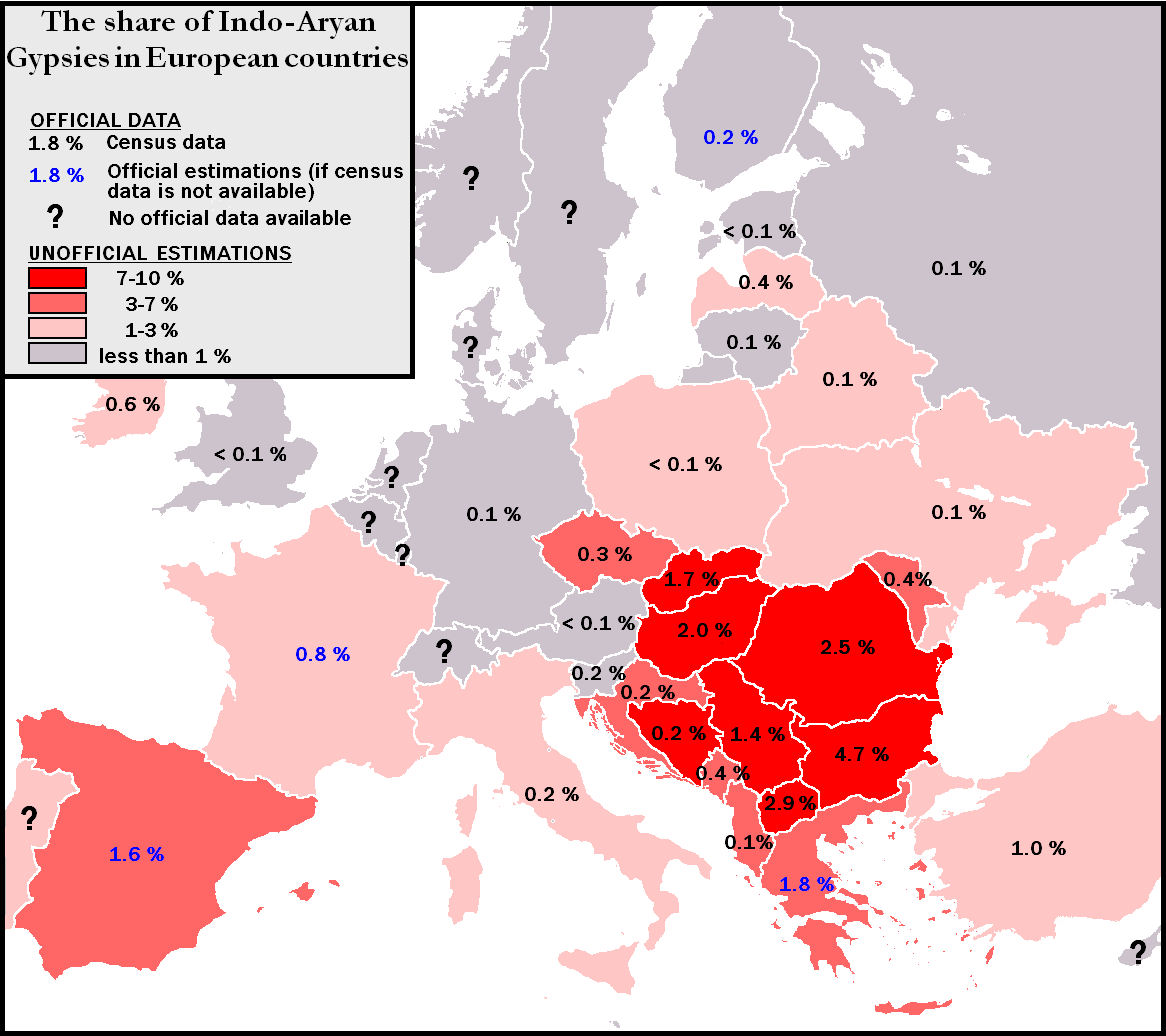
(Picture belongs to Wikipedia Commons)
The first thing a new visitor in Sofia sees are horse carts with roma picking trash. Bulgarians don't do that. Roma don't work in offices. They live encapsulated, and are discriminated in numerous ways. Yet physical violence against Roma is rare, and very few Bulgarians would approve of it, in spite of a strong fascist presencein the parliament.
Anyone that has seen films like Time of the Gypsies or Gadjo Dilo, knows that the relations between Roma and the majority population is far from easy even in these countries
(Footage from Gadjo Dilo)
Yet, these tensions do not turn as nasty as in Central Europe, at least not for now.
Is the economical crisis more severe in Central Europe? Maybe it is. Bulgaria is hit late, and large chunks of the economy are not really for real. The crisis might also seem less critical if you fall from a lower level. (see GNP numbers above). But yet, this is a simplification worthy of dogmatic marxism. If unemployment and poverty in itself generated violence, there would be plenty of violence here. My own experience tells me the opposite.
Maybe the key to understand this kind of violent frustration is in the progress itself. Maybe it is Central Europe's higher GNP, and more developed societies that generate the violence?
We have seen in history how societey turns explosive not in times of absolute depression, but in time of rapid development. Consider the Russian revolution, the -60's or the french revolution. I don't think Bulgaria is remarkably tolerant towards roma. But there is probably a remarkable tolerance towards poverty here. The horse carts are still natural parts of Bulgarian cities. And the roma are still pleased with what they get.
If Bulgaria, and Romania, continues developing like the countries have done until now, which would be a wonderful thing, within a generation there would exist a generation of romas who go to university, and start asking for the same jobs as Bulgarians. That will be an explosive situation.

It is an enormous tragedy for all families involved, and for the Hungarian nation,of course. It is also a sad news, following similar stories. Roma people, just like Moldovan's turn to Canada as one of the few liberal haven's in the world, not because of povert, then they would go to Paris or Berlin, but because the increased violence agaisnt them in Czech republic.
The Slovak police was humiliated when the humiliation of two roma boys was filmed and spread online. Look at the guys in the film. It looks like this is not the first time they enjoy this entertainment. The video has been REMOVED from both Youtube and Euronews. Youtube blames the undue discussion... couldn't the comments be removed in stead of this very important witness to Europe of today?
It could happen everywhere, of course. The thing is that it doesn't. It doesn't happen in Bulgaria. This kind of reports reach us almost daily, but they don't come from Europe's poorest countries. They come from central European countries, countries that are way ahead of Bulgaria in GNP, civil society development etc. Wolfram Alpha suggests that Hungary's GNP is three times bigger than Bulgarias,just to give a number. (Wolfram Alpha's numbers most likely refer to CIA factbook)
I think it is of outmost importance for everyone, to consider this issue: Why is violence against Roma exploding now, in the most developed parts of ex-communist Europe.
Is Bulgaria more tolerant towards roma? First of all - there are at least as many Roma in Romania or Bulgaria as in Central Europe.
(Picture belongs to Wikipedia Commons)
The first thing a new visitor in Sofia sees are horse carts with roma picking trash. Bulgarians don't do that. Roma don't work in offices. They live encapsulated, and are discriminated in numerous ways. Yet physical violence against Roma is rare, and very few Bulgarians would approve of it, in spite of a strong fascist presencein the parliament.
Anyone that has seen films like Time of the Gypsies or Gadjo Dilo, knows that the relations between Roma and the majority population is far from easy even in these countries
(Footage from Gadjo Dilo)
Yet, these tensions do not turn as nasty as in Central Europe, at least not for now.
Is the economical crisis more severe in Central Europe? Maybe it is. Bulgaria is hit late, and large chunks of the economy are not really for real. The crisis might also seem less critical if you fall from a lower level. (see GNP numbers above). But yet, this is a simplification worthy of dogmatic marxism. If unemployment and poverty in itself generated violence, there would be plenty of violence here. My own experience tells me the opposite.
Maybe the key to understand this kind of violent frustration is in the progress itself. Maybe it is Central Europe's higher GNP, and more developed societies that generate the violence?
We have seen in history how societey turns explosive not in times of absolute depression, but in time of rapid development. Consider the Russian revolution, the -60's or the french revolution. I don't think Bulgaria is remarkably tolerant towards roma. But there is probably a remarkable tolerance towards poverty here. The horse carts are still natural parts of Bulgarian cities. And the roma are still pleased with what they get.
If Bulgaria, and Romania, continues developing like the countries have done until now, which would be a wonderful thing, within a generation there would exist a generation of romas who go to university, and start asking for the same jobs as Bulgarians. That will be an explosive situation.
Subscribe to:
Posts (Atom)