Showing posts with label ecological issues. Show all posts

Wednesday, December 26, 2012

Of fiscal and other cliffs


Most likely American politicians will reach a deal that prevents the country from going over the so called fiscal cliff, and most likely they will do it as late as possible. This is all part of the political theatre. Invent a problem, describe it as a matter of economic survival, and solve it half an hour before deadline in an all night meeting with no journalists present.
Rocky Cliff with Stormy Sea Cornwall-William Trost Richards-1902
In deed, there are real problems to solve. There is climate change. A war in Syria. An economy that no one is content with. Not all world citizens have access to clean water - others still have o access to education. But "the fiscal cliff"? Unlike these other problems it does not correspond to anything happening in the real world - it is a problem invented by US politicians, it would be rather disappointing if they can not even solve that.

It is easy to criticize politicians. But maybe the problem is not that they are not doing their job, but that they are nothing but human? Maybe it is the curse of humanity that we can only solve the problems we have invented (not the one we have caused) - on an individual as well as societal scale. We are apt at resolving quarrels with friends that were not really about anything at all, but quite unable to deal with facts beyond our own making, e.g. our own death. Similarly, society is better at solving problems related to traffic - a system invented by us, than problems relating to matters beyond our control, like some historical - or environmental issues.

If so... it would mean that we can expect from politicians to solve the fiscal cliff (and maybe ask them not to invent another one), and blame them for all those kids who don't go to school. But on the other issues, clean water and climate change, we can not expect human solutions. We have no choice but trusting our faith and good luck.

Monday, June 27, 2011

Good news

It is often said that bad news dominate media, and that positive developments are ignored since they do not have the dramatic news appeal of a disaster. Climate change kills ice bears makes more headlines than the consumption of ecological food increases.

Young-Toad

Wednesday, April 13, 2011

Was this ever our land?

As a novice gardener I have been reading up on organic gardening lately, and managed to grasp a basic tenet - don't nourish the plants - improve the soil. That will benefit an entire eco-system. Besides, it is the soil, not the plants that we pass on to future generations.

Once you manage your own garden soil depletion becomes emotional - and maybe it is first when you try to grow something you realize how dependent mankind is on fertile soils. Unfortunately there are as many ways to destroy soils as to improve them.

Huffington Post has posted a video from the Environmental Working Group, reporting that soil erosion in Iowa is much worse than official number say. There is no reason to believe that it looks otherwise elsewhere in the US the video says. Neither in Europe.


The video starts out with Woody Guthrie's classic words - “this land was made for you and me”. The video rethorically asks: If that is true, then how comes farmers are allow to poison and destroy it? By over-using land and demolishing traditional soil protections like bushes along rivers, industrial agriculture is destroying the land we thought was ours for quick and high profits.

The problem is obvious for everyone - even the European Commission. But agricultural policies on both sides of the Atlantic plays a pivotal part in keeping soil depletion profitable. How? Through subsidies to agriculture, based not on how the land is worked, but how much it yields. Which is an incentive to any farmer that is financially dependent on his land to over-use it.

It is easy to understand why states sould want to subsidise specific kinds of farming - be it traditional farms kept for the sake of the landscape (they sometimes get subsidies), experimental eco-farms (they never get subsidies) or other cases. It is harder to understand why commercial agriculture needs to be subsidied. We all need food, so in a working market economy it should be the easiest business to make money form.

Outside books, there is no such thing as a working market economy (even though it sounds nice). The 21th cenury world is designed by political influential people. Some are elected, some are not.

For various reasons, these people like to see us drive cars and go shopping in malls. To do that we need to be working 8-5 in industries and services and buy our food in stores. Whichis dull, so our loyalty to the system must be bought with cheap food. Which is why agriculture is subsidised. It is not about supporting farmers, it is about keeping the consumer society running. If you find it hard to imagine the political implication of high food prices, just take a look at Tunisia and Egypt.

This might sound radical and bitter. The real picture is more complicated, of course, but it is not any different. This is the how the world looks, and everybody knows.

But since we, also the environmentally aware of us, are the one's who eat this cheap subsidized food, we reap the profits of the system, and leave future generations to pay the bill. We have no incentives to change anything, and nothing changes.

Which is why soil depletion may be a good thing - if it gets serious enough to affect food prices, we will have to face the problem we have created, and ultimately save our selves with organic agriculture. There are plenty of ways to grow food without depleting the soil. We just don't have the incentives to use them yet.

Monday, July 19, 2010

Agriculture that generates hunger

7.1 mn people are currently suffering from famine in the Sahel. It would be naïve to think that all of them will make it through the winter. We thought that we had passed headlines about famine to history, but in fact they are bound to become our future if we don't give up two myths. One is that modern agriculture is efficient. The other is that development means urbanization. These thoughts are illusions, and until we drop them, we will only move closer to a very hungry world.
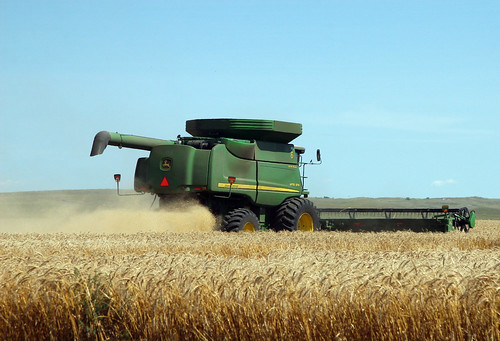

John Deere combine

Conventional agriculture is not efficient

Above is a top of the line combine from John Deere. Machines like these are useless on small fields. Big fields require pesticides. Lands treated with pesticides demand fertilizers. The combine must have oil. That is the ecological cycle of conventional agriculture, also known as agribusiness. Except, it is not really a cycle...


In spite of deploying few people to produce fantastic yields, conventional agriculture is not efficient in the relevant sense of the word. A study in the Phillipines showed that Growing rice the organic method was 4 times more energy efficient than the conventional method. The organic method is defined as farmers who no longer apply chemical fertilizer and pesticides. Instead, they practice rice straw recycling, use green manure crops (Azolla, Sesbania); and raise livestock (ducks, swine, cattle or carabao) to produce on-farm the manure which they apply in their farm as fresh manure or prepared into compost. In other words - the farmers who used imporved methods that they had inhereited from pre-industrial times were more efficient than their pseudo-modernized collegues.


Several studies have come to the similar conclusions. Labour intensive organic farming is more energy efficient, more secure and sometimes even give bigger yields. Lim Li Ching writes on the Institute of Science in Society's homepage:

Projects in Senegal involving 2000 farmers promoted stall-fed livestock, composting systems, use of green manures, water harvesting systems and rock phosphate. Yields of millet and peanuts increased dramatically, by 75-195% and 75-165% respectively. Because the soils have greater water retaining capacity, fluctuations in yields are less pronounced between high and low rainfall years.

The World Food Program cites errant rainfall as one of the reasons to the latest hunger catastrophe in the Sahel... it is clear that conventional agriculture has nothing to offer the world's hungry.


Poverty in the countryside feeds urbanization


For traditional farmers, the competition from agribusiness is killing. Since the headquartes of agribusinesses like other businesses are situated in the cities, the profits from the bigger yields leave the countryside. In a country like Sweden. the contryside populations relies largely on tourism and state- or EU support. As the wealth grows in the cities, poverty grows on the countryside, which draws people away from there to the city, where they (hopefully) work for a living and buy their food instead.


The UN's World Urbanization Prospects states that by now more than half of the world's population live in cities - more people live in the countryside in the developing world than in developed countries. In 2025 more than half of the the population in what is today the developing world will live in cities, and by 2050 68.70 % of the world's total population will live in cities.


Since people must eat, that means one of two things - either these cities must be self-sufficient in food production, or the third of the population still living in the countryside must produce food for all the rest.


Cities have never been self-sufficient, and it seems unlikely that they will ever be. With radically different eating habits it would maybe be possible in a city like Lund with 300 inhabitants/km2. But how could it be possible in Kolkata with the staggering 29,650 inhabitants/km2? Kolkata is the world's most densly populated city. It is a safe bet that by 2050 less people than today will eat the food that they have grown themselves. And that is the very idea of progress - already Adam Smith noted that the wealth of a nation grows when people divide their labour. If the farmer farms and the blacksmith hammers out the nails while the programmist sips jolt cola in front of the computer screen, all of them are more eficient and get more wealth to share in the end.


Smith is obviously right about this. Just take a look around. Wherever you sit in the world, you are likely to see an affluence that your parents or grandparents could never dream of. This is largely due to industrialization and a greater division of labour. The problem with deploying Smith's ideas today is that his classic work The Wealth of Nations was published already in 1776. Smith could never have predicted how the use of oil would change the economic dynamics.


Urbanization is not sustainable


Unfortunately, it is not the human intellect that has made the the affluence around you possible. It is not human toil that has allowed almost all of us to move to the cities. It is all about oil. Subsidized oil has made transports cheap, and has decoupled the food production from social life. For my salad I might use spanish tomatoes, dutch lettuce and bulgarian cheese. For my mother's birthday I could have bought a kenyan flower. These products are all taken to my store by the use of oil. Without oil, the cities would be very sad places to live. But if transports was the only problem, we would be better off than we are.


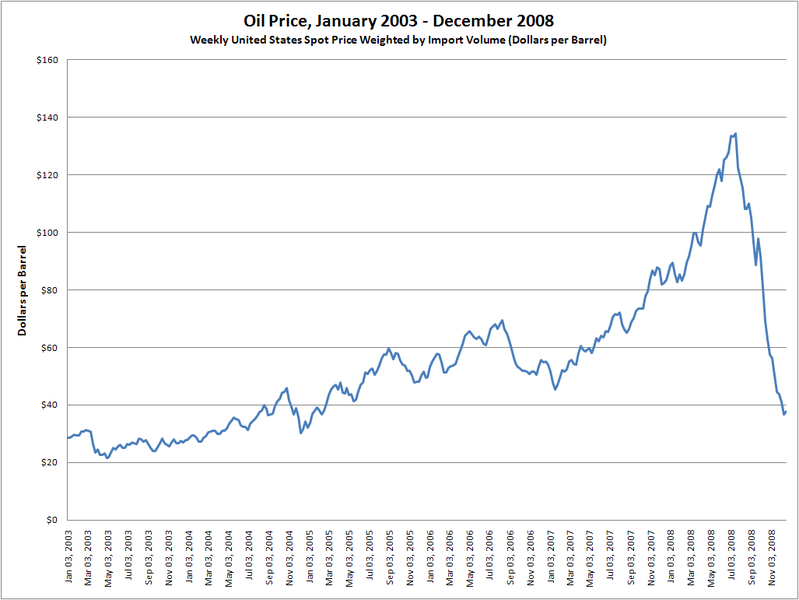
The Swedish author Gunnar Lindstedt writes that in terms of working hours the industrialized agriculture produces 40 times more food than it did before the advent of oil. But working hours was the way we measured work in Smith's time. The man or woman who drives the John Deere combine above is not necessarily more intelligent, skilled or hard working than his or her ancestors. It is the oil in the tank that does the work. In a world where 7.1 Million people are allowed to starve, it seems seems murderous to critizise an 40% increase in food production. But the other side of the coin is that without oil the current working hours in agriculture will produce 40% less food. That is really scary. Especially for those living in the cities, who have no other means of obtaining food than paying for it. The prices they pay are very closely related to the price of oil as the charts below show (Be aware of the different dates). The situation gets critical when oil costs more than 100 USD / barrel - and at one point it becomes impossible to produce food and sell it as a commodity with profit, if you use oil for production and transport. That will be the end of agribusiness. Spanish tomatoes will not be avaliable in my store any more. Neither will there be enough rice in Kolkata.


Peak Oil

When are we running out of oil? Recently Lloyds and Chatham house published a study, that warnes businesses to adapt as soon as possible. Paul Stevens from Chatham house calculates that the lack of oil will push oil prices above 200 USD / barrel before 2020. The impact of such a price hike on food prices is easy to imagine. In 2008 a hike to 125 USD/barrel led to riots and political crises. It will affect much more than 7.1 million people. Worst hit will be the poor in the cities, exactly the same people who are now leaving their rural lives behind. What Chatham house and Lloyd's report says is that within decades, they will need their lands back. A prioritized task for policy makers should be to assure that they get them back.


But why not simply substitute oil for something else? It is not easily done. We can easily heat our homes with other kinds of energy, but it is hard to imagine a global transport system that runs on wind power or coal. Sailing ships and steam boats? Why not, but they would hardly sustain the current levels of exports and imports. There is of course one easy fix - to run motors on ethanol in stead of gas. But almost immediately after trying that we saw the food crisis of 2008, casued on one hand by high oil prices, and on the other by fertile grounds being used for ethanol production. With a growing population, we will need to use those fertile land even more.


Algae is maybe a more promising substitute. But the technology is still experimental, and at the moment more energy is spent on making algae into fuel than the give as fuel. Unless this research takes a giant leap forward, we will have to do with the fastest growing source of energy - human labour.


Without oil we will need 40 times as many people working in agriculture as today. It doesn't necerssarily mean a return to the middle ages - only a return to economical realities. We know more about biology and agriculture than we did a two hundred years ago, and we exchange information faster than ever. What Smith shows is that the only force that can ever help us is human innovations, not oil. Unlike agriculture, the internet can easily be maintained with other sources of energy, so maybe the future countryside will be populated with self-sufficient netizens?


More people in agriculture can mean that people move back to the countryside. This is not uncommon in history, quite recently it happened in eastern Europe after the fall of communism(PDF link), and it will no doubt happen to some extent. But wew can also redefine what a city is. The problem is not the number of inhabitants per se, but the population density. Cities could work as clusters of smaller, largely self-sufficient towns. The city landscape could be used much more productively than it is used today. We can grow food on rooftops, balconies and in shipping containers, becoming a lot more self-sufficient than today. The borders between cities and countryside will become blurred - and hopefully the internet can preserve the best of our oil-dependent urban civilization. And make labour-intensive farmwork profitable.


A hungry man is an angry man, but a man who fears hunger is innovative. I do not doubt that mankind will adapt to a world without oil pretty fast when it is forced to, but probably not one day too early. The current pattern with less and less people producing food for more and more consumers is not sustainable. We should start thinking now about how we can turn urbanization trends around. Developing countries should beware of making the same mistakes as developed countries has made - and fortunately this seems to be more and more acknowledged. I think the key is to keep agriculture depending on human labour rather than oil, but improving access to services like healthcare and education in the countryside.


We already live after peak oil. Adapting to that doesn't require money. It only requires our time, dedication and intelligence. But I think it will also be fun.

Friday, August 7, 2009

Nabucco + South stream = crazy

Geopolitics don't seem to have changed much since Napoleon's days. Human Rights, environmental- or even budget concerns are easily sidestepped for Strategic interests. Expenses for Obama's wars are not included in the US budget, and I am pretty sure the same thing goes for Putin's Russia.

That Russia and the West have conflicting around the Black Sea was evident in last summer's war in Georgia, a place were tensions are said to build up again.

Putin has recently visited Ankara, to socialize with the Turkish politicians, and gather support for the Russian oil pipeline project South Stream, a fact that teases the anti-Russian Romanian press. Putin transforms the Black sea into a Russian-Turkish lake, Cotidianul writes.


The point of South stream, a brain child of the soulmates Putin and Berlusconi, is to avoid Ukraine and Romania, two countries traditionally hostile to Moscow, and leverage traditional partners like Bulgaria and Serbia. Bulgaria has so far turned a blind eye to the geopolitical implications, and happily agreed to South Stream as well as Nabucco , EU's competing project. The new government might not be as pro-russian as the earlier, though.

Nabucco is EU's grand project to break free from Russian gas. Eventually the pipeline will be filled with gas from democracies like Azerbadjan, Turkmenistan, Egypt, possibly Iran, and why not... Russia.


Putin seems to play this game much more skillful than his collegues in Bruxelles. The Turkish govenrment works hard to keep the excitement for EU after years of waiting to get in. When Iceland passes in the fast line one can:

  1. understand that Ankara loses hope
  2. understand that Ankara needs to put some kind of pressure on Bruxelles, to make something happen.

EU has offered less than nothing to Turkey, not even a respectful "no". Contrary to EU Russia has now offered Turkey gas supplies, hard cash in a peak oil scenario.

But at the end of the day ... in a world where we might be out of oil within ten years, what kind of madness is it to build two competing pipelines so close to each other? Two pipelines that go through lots and lots areas that should be protected. In the best case scenario Nabucco frees the EU from dependence on Russian oil, devastates nature around the Black sea, and entrenches the EU's dependence on oil. And with Putin in power, don't expect the best case scenario.


Pics. taken from Wikipedia Commons . Cred to them.


Thursday, July 30, 2009

Global heating craps Borisovs anti-crisis policy, but salvation might be imminent.

If you only will read three... eh... five words today, read these:

----The communists lost in Moldova----

If you've decided to read more, find the news on New York Times or the BBC .

The new government will have a lot to deal with, as do the new Bulgarian. And the biggest problems might not even be corruption...

In an earlier post I praised Bojko Borisov, Bulgarias new premier minister for putting agriculture on the agenda. Borisov stressed that employment in the agricultural sector is an important buffer in times of unemployment and the need to develop the Bulgarian countryside. It might be bullshit, but at least the guy has spotted an important problem.

One week the Bulgarian ministry of agriculture announced that the agriculture output in Bulgaria will be ca 20% lower in 2009 than in 2008, Noggers Blog reports. And it is not only Bulgaria...

Similar numbers are announced on marketskeptics . Argentina, Ukraine, the US, Russia... all report falling sales. Sometimes aggravated by bad politicians, but the main reason is one - heat and drought. Caused by climate change.


On marketskeptics you can see a nice graph of the sugar price hitting an all time high, so I guess food prices are set to get higher globally... but maybe we should be happy as long as there is something to eat.

As gloomy as these numbers sound, there is no reason to despair. I am sure most people who read this blog can easily consume 20% less in general. Myself I could easily eat 20% less if I had to. Maybe I should try it next week... to take a single hot dog in stead of a double, 33 cl of beer in stead of 50 cl...

Food is important. In the interconnected world it is very easy to forget that the coffe you drink actually come from a plantation, dependent on water and sun etc... Sometimes I feel the internet has only alienated us even further from this basic reality. That's why I was really happy to see the homepage of Smaka på Skåne.

Skåne is the southernmost region in Sweden, whereto I will soon move. If you write "potato" in the search field, you will get results where in Skåne you can buy potatoes produced on local farms. Food that has not travelled all over the world letting out CO2 and poison. It is just genius, a combination of internet technology and local farming.

This one is only in Swedis for obvious(?) reasons. But I guess it could be easily translated.

The picture is purely there for aestetical reasons, taken in Texas in 1955. It is taken from flickr, credits to austrini, found through creative commons

Tuesday, July 21, 2009

Musing about green Bulgaria

The American Radio Show Living on the Earth has published a nice piece about Zelenite. It is available both as text and as streamed audio :)

The MP3 is also a free download.

From For the nature I also got to know that a new Wind-power park is planned in Bulgaria, which of course is a good thing. We were in the mountains in the weekend, and it was truly a sign of hope to see tow wind-generators on mountain tops.

On the other hand, I am increasingly sceptical towards ´this kind of huge project in general. It will cost  80 Mn Euro, and involve 20 generators. Big investments mean centralised governance and conentration of power.

As the text on Living on the Earth points out, democracy and environmentalism goes together. I think as much as possible of the new clean energy projects should be "outsourced" to private or local initiatives. Sun cells on roof tops, powering up nothing more than the house, is acutally a much better idea I think. At least as an ideal, of course bigger investements might be needed also.

Monday, July 20, 2009

More ski lifts on Vitosha

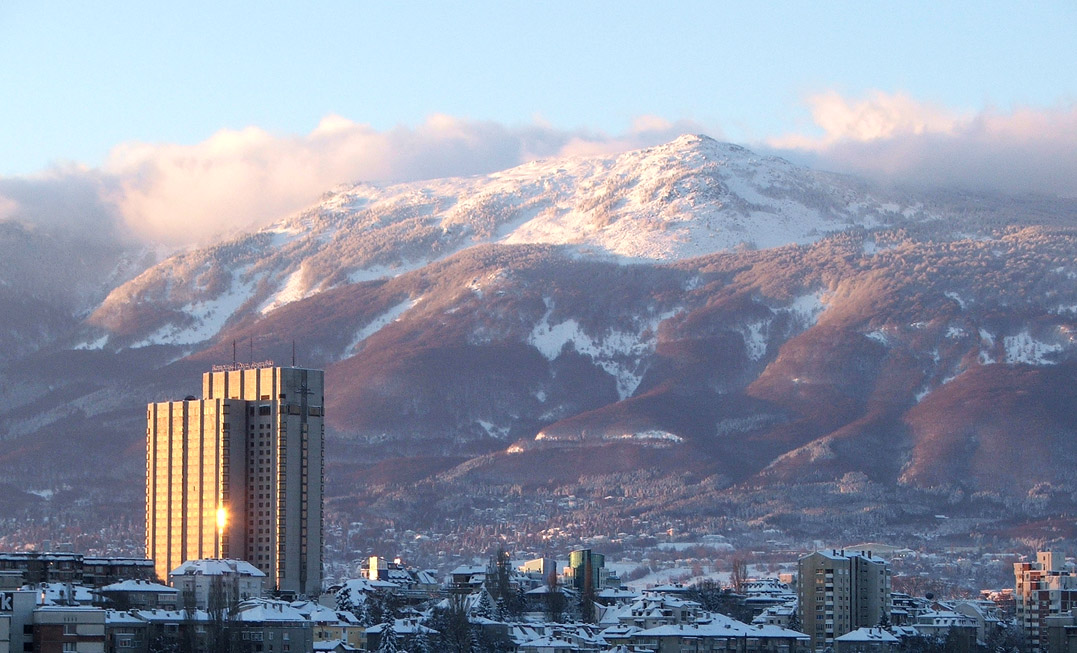
Vitosha is the mountain overlooking Sofia. On it, there are already a number of Ski lifts, but the company running the business (Vitosha Ski) have now admitted a new plan for legal approval. The new plan suggests 7 times more Ski lifts, and 260 hectares of protected land exploited.


Picture from wikipedia commons. Lincense: Creative Commons Attribution 2.0

This amount of ski pists involves numerous other installations, such as parking lots, an artificial lake for artificial snow for artificial skiing in artificial winters etc.

The investors have used a Gallup poll, to find that the Sofia population favours "clean paths" on Vitosha, whatever that means. The documents have not been published online but have been written about on e-vestnik.bg and the blog Spasi Vitosha (Save Vitosha).

Potential critics, like environmentalists or organisations representing other mountain activities than skiing, (e.g. hiking) have not been invited to comment on the plan. but they do, on the internet.


Sources : @zelenite


Friday, July 17, 2009

Invitation to climate action

For the nature invites to informal workshops on climate change. The workshops will focus on what you as a citizen can do, and will take place 24/7 in Smoljan and 1/8 in Stara Zagora. It is all part of the European Commission's climate change program that you can read about here. (English site)

Wired has a nice post on the topic... appearantly strange light phenomena, similar to Aurora Borealis are visible over the northern hemsphere. Beautiful, and most likely man made.


Sources: For the nature , Wired , Youtube

Thursday, July 16, 2009

The fifth European Eco-Festival "Green Wave - 21th century" is finished

In Koprivshtitsa, Bulgaria an ecological festival with pariticpants from Europe and even further away have been successfully closed. The topic of the festival was garbage, a hot topic in Sofia during the last year, and participants claimed that a closer cooperation between politicians and experts were needed.

The German journalist manfred Ladvig showed his newest film about illegal/legal but immoral exploitation of woods, a fact that concerns not only Europe, but the whole Europe, and countries like Kambodja, Laos and Vietnam.

I wish I was there :)

Source: For the nature

Monday, July 13, 2009

Environmentalists can't sleep...

While political Bulgaria is more silent than ever, everyone is awaiting the new government that Bojko Borisov will announce 27th of July. maybe we should be thankful that zelenite did not enter the parliament, because the environmentalist on For the nature are as active as ever. Among today's news we find that:

A coalition of 30 NGO's are asking the Administrative Court to stop the building of ski pists on the Vitosha mountain next to Sofia

The European Coalition has publshed a report
, stating that Europe will most likely to continue lose its biodiversity, most of all due to a contra-productive agricultural policy.

Also in Paris, people are protesting against exploitation of the Rila mountians. Pictures can be seen here.


Monday, May 18, 2009

Think globally - act locally

Democracy is a strange thing, much like love. On the one hand it is about putting global interests, of society, of the planet ahead of your own. On the other hand it is about expressing your own opinion, and defy central ruling.
I believe actually, that there is a kind of contradiction - the bigger the society, the more despotic central ruling will be, which is why the concept of a democratic Europe is so much more difficult than a democratic Sweden or a democratic Bulgaria.

The citizens in Pomorie have used their democratic rights, and voted about an oil pipeline that was projected to go through their county. The answer was a huge NO! , whith 98,97 % of 14.900 votes against the proposition, Dnes reports.

As happy as the enviromentalists might be about the outcome, numbers like these are usually associated with "free elections" in communist states, so they don't speak well about the local democracy to me. I sort of pity the 153,47 guys who voted yes. I'm from the countryside, so I know that everyone will know who theya re, and let them know...

That said, I would have voted no myself.

Nonetheless, more decisions taken locally is the only way to counteract expolitation of the nature. And it would greatly enhance the Bulgarian, and European democracy.

In Varna, Zelenite have held discussions with local citizens on the topic "The citizen and the power - how can we influence the movement of society and the politics" (That is sort of a litteral translation.) See the pictures here.

BlueLink.net have launched a campaign for internet freedoms. Bluenet usually does not campaign, but provide internet resources for NGO's, but since they feel that their work is threatened by legislation, they have chosen to take a stand.

On their webpage they explain why in an english post. It gives a nice background to civil movements in Bulgaria, points out the pivotal role of the Internet in the new generation of protest movements that are the topic of this blog, and gives quite an optimistic view of this generation.

Read the text, and in case Maladets! is your houshold newssource for Bulgarian NGO's, I suggest that you update with an rssfeed with BluLink's news in English.


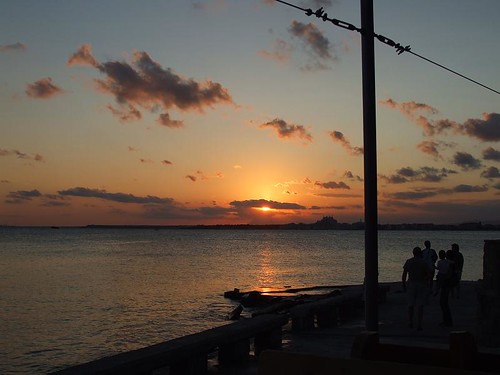
Sunset over Pomorie. Picture taken by NIKO. Taken from creativecommons.org

Wednesday, April 22, 2009

Earth day in Sofia - Corrected

Today is Earth Day, and the ecologists in Sofia take the chance to bring their message across to the public. I was in the center my self around lunch time and saw several banners with ecological messages.

There are several events in the town today. Find more info on Forthenature.org .

If you, like me will miss them, I reccomend Aleksander Ivanovs online photo exhibition .

Today the Bulgarian parliament approved changes in the electoral legislation. The entrance level to the parliament is increased to 8 % for coalitions, and 4 % for single parties. This will make it more difficult for smaller political alternatives (did someone say Zelenite?)

According to many analysts, the only political forces with a reasonable chance to enter the parliament will be the Current governement parties, the liberal parties IF they are in a coalition, GERB and Ataka.

Bulgaria e nasha have good reasons to protest against the decision, that was apporved against the president's veto, and after most of the opposition had walked out of the plenary hall.

Friday, April 3, 2009

!!! Urgent demonstration against the lifts at Rila

Today the lift on the Rila mountain will start running, in spite of being built without the probe of ecological impact prescribed by the law.

For the Nature calls everyone to an urgent demonstration tonight at 17,30, Macedonia Square, Sofia, in front of DNSK (The Department of National Building Control).

The announcement (in Bulgarian) to be found here.

Source: For the nature

Wednesday, April 1, 2009

Legal support for Strandja National park

The Bulgarian high supreme court has finally declared that the hotel-building project "Zlatna Perla" (golden pearl) in Strandzha Natural Park is illegal, a decision the environmentalists have long been awaiting.

This is a temporary victory, but the struggle for the future of Bulgaria's natural parks continue. On the one side we now have the environmentalists around the For the nature coalition, the supreme administrative court and the directors of the national parks, that of course old key positions in monitoring what is happening on the ground.

Local politicians in the two affected counties Tsarevo and Malko Turnovo try to claim their rights to decide over the parks. The ecologist's fears are well grounded that they might use this power to enable land for development for business partners they've been dealing with before. Behind them stand politicians in the government. The ministry of environment and water is currently working for a new development plan for the area, where due environmental concerns have not been taken, according to For the nature.

Source: For the nature

Thursday, March 19, 2009

Bluelink prepares digital early warning program

Bluelink is an internet protal publishing and spreading information about ecological issues in Bulgaria.

They have now announced an upcoming early warning system. Crimes, let's say an ilegal building process, will be localized on an online map, and the information spread in text or visual format, to email adresses, mobile phones etc.

Source: For the nature