Showing posts with label Sofia. Show all posts

Wednesday, July 13, 2011

Sofia Bikes

Before heading south to Plovdiv I've spent a little less than 24 hours in Sofia. It was relentlessly hot, and to a large extent everything was as I remembered it. Lots of shabby houses still standing around, several new glass and steel buildings int he outskirts, and building sites everywhere which gives a sense of a constant work in process.

Besides from the better looking park in front of NDK, two things impressed me, though. One was the boom of small stores/bars/restaurant with a dedicatedly alternative and green image. The second thing was that it seemed everyone has bought a bike since I was last around.

This post is the first on my holiday blog maladets! - freewheeling. Stay updated with it, if you want to read more like this. 


(Picture grabbed from the  Among the Birds blog) (c) 2010 Zona Urbana

There are a lot of cool places to go nowadays for those living in, or staying in Sofia. A bunch of alternative water holes present themselves on this lovely cartooned map of Sofia. A must for anyone who wants to visit the best of Sofia. This kind of places, the common ground between them might be a shared clientèle, and shared values like alternative life style, small scale and environmental thinking. It is vegetarian restaurants, bio-shops, and craft stores producing jewelery form recycled material.

As a Swede, it is not without envy that I watch such places appearing one more and more street corners. In my home town, Lund, the development seems to be the opposite - small stores are rapidly pushed out of market by big retail chains and the shopping malls outside the city. It is curious how the numerous malls in Sofia has not yet managed to destroy this market for small scale commercial activities.

Two reasons are obvious - more and more young Bulgarians have developed a taste for this kind of things, and also some money to pay restaurant bills with. And due to the still rough state of many buildings in central Sofia, rents are still far from what they are in Western Europe, even in a place like Lund, which makes it easier to make money on small businesses. If I was a Sofia politician, I would think a lot about how to improve buildings in the center, without raising rents too much. Too many cities have made their centers tidy but boring. Sofia still has a chance to avoid that.

So for the bikes. When I was living in Sofia, some people did bike, but they were very rare. It was perfectly possible to go an entire day without seeing a single bike. Now, bikers are still a minority, they are a very visible minority. In almost every crossing you would see one biker navigating between cars.

Which is probably one clue why so many people do it. Biking is green, cheap and fashionable as in Western Europe, but except for that it seems to be the absolutely fastest way to move through central Sofia. Cars are usually stuck in two lines, buses and trams as well, but a daring biker find his way in between. A Swedish biker probably wouldn't, let's say that the bicyclists in Sofia bike pretty much as the drivers drive.

I look forward to coming back to this city twice a year for the rest of my life, and this is the kind of things I hope to see more of. Which reminds me of my everyday life back home... it is definitely time for me to buy a new bike.

Tuesday, November 17, 2009

Those Bulgarian women...


(picture from BGNES)

Sofia will be headed by a woman, for the first time in history. Sofia's new mayor(esse) is called Yordanka Fandakova, and she was the candidate of Borisov's GERB party, elected by more than 66 % of the capital's residents. Bulgarian women are strong and responsible, and it seems they increasingly becoming visible in politics.


Picture from wikipedia

Not long ago Irina Bokova was elected director of UNESCO, the highest international position a Bulgarian politician has held since the fall of communism.


In the spring Meglena Kuneva attracted voters en masse to NDSV, "the King's party", and raised hopes that the king himself failed to live up to in the national elections.

Obviously, those Bulgarian women has something going... Fandakov is not expected to go her own way - she is supposed to run Borisovs politics in the capital, but this doesn't make her position less influential. Obviously both GERB, the socialists and NDSV leaderships know how to benefit from brilliant women. (I dont know much about Fandakova, or Bokova but I have a good general impression of Kuneva).


In the article I link to initially, Ivan Dikov compares the election of Fandakov to "Napoleon making his brother Joseph Bonaparte King of Spain 200 years ago, or to Vladimir Putin making Dmitry Medvedev the next Russian President 2 of years ago"

Comparing the appointments of Fandakova, Bokova and Kuneva, some more things could be said. As a foreigner, it is very easy to understand how the old government of Socialists, NDSV and less so the ethnic turkish party merge with european and international elites. They look and feel like western politicians. They may not walk the walk but they talk the talk, and that is what matters on those heights.

Borisov on the other hand, may be doing all the right things, but quite frankly he still looks like a bodyguard to me. I suspect he does so also to my government at the EU-meetings.


On the streets of Sofia, however, people might be tired of nice words, and the election of Fandakova shows that the confidence in Borisov's offensive politics is still there. It also seems like Borisov is monipolizing the healthy right wing vote - both racist Ataka, and the liberal-rightist SDS and DSB backed Fandakova.

So, congratulations to Fandakova, congratulations to Borisov and most of all: congratulations to Bulgarian women - taking public space, and representing all political forces in the country.

Monday, August 24, 2009

Concordia - A Social center in Sofia

Concordia is an Austrian social project, active in Bulgaria since the winter 2008/09. The foundation also works in Romania since 1991, and Moldova since 2003. The Concordia center in Sofia hosts about 87 inmates, all under 18. The staff are Austrians, Bulgarian employees, and volunteers. The inmates get food, housing and counselling. The center also works with homeless people living in the streets, offering food, and welcoming lunch guest if there is food left after the imates ate. Many clients are drug addicts, but no drugs are allowed in the center.


I spoke some words about their work with Sabine, one of the Austrian staff who has been working in Sofia since this summer, and by now by far outshines me in Bulgarian. She tells me she loves the Bulgarian nature, but finds that society, especially the bureacracy has kept many communistic sides. But the biggest impression is probably the great differences - poverty next to luxury.


A table tennis game at Concordia

Concordia is a Jesuit movement, and Sabine reassures that the social work gets a different depth when it is based on the spiritual believes. But she tells me that Bulgaria strikes her as a "very secular" country. Especially elder people surpise her with not knowing about religion. "We do have a morning service, and I wouldn't say that it attracts the masses. But it seems like those who come are happy about it." Concordia does not cooperate with other churches i Sofia, orthodox or protestant. Sabine says that it will take time to build up that kind of relationships and that Concordia try to be modest in stating their spirituality.


What about the EU? Does the membership bring any improvement to the poorest Bulgarians? Maybe. Maybe a little. The EU membership forces Bulgaria to modernize in a number of ways, and with the membership comes foreign investment, creating jobs. But in Concordia's daily work the differents are slight. Concordia is also not reliant on any funding from the European Union, only private donors.


Concordia's website: http://www.concordia.co.at

Tuesday, August 18, 2009

Boom

I live in Sofia. Every morning I leave my girlfriends flat in the asolute center and take the tram to the neighbouring Pliska district, an office district, still kind of central.


Sofia is booming,and has been so constantly since I came here. Building projects are everywhere. It is not difficult to understand why - still most people live in sadly underisolated communist block houses, that would be perfectly square if they were properly built, which they are not. With a major remont these flats can be made to rather cosy homes, and obviously there is a huge interest in DIY shops in this part of Europe, an interest that most likely has contributed to IKEA'Ss brilliant sales in Romania. Bulgarians are still waiting for their IKEA, and it would be here today if it wasn't for the financial crisis.


Crisis isn't exactly the first thing that comes to your ming when you see his frenetical building spree. But what if the whole thing is real? What if people like Michael J. Panzer are true - their thesis being that we are still far from any bottom, and the different bailout programs are like taking painkillers against a broken leg and keep walking. Everybody knows that building projects are a favourite mean of money washing world wide, so also in Bulgaria. So maybe the real economy is not so important as it looks on the paper... but still.


I sometimes have the feeling that these emerging economies are bubbles that might burst. Next to my girlfriend's flat Serdika center is now being built, promising to be the biggest shopping mall on the Balkan peninsula.


In a city that already has (at least three) shopping malls, and an average income of 200 EUR per month.In a country whith a GNP ten times smaller than in Sweden,where a three room flat have roughly the same price. Milk and clothing as well. Cars are more expensive than in Sweden - yet the streets of Sofia are completely crowded with them. Who buys this? Where do the money come from?


Economists warn that commercial real estate, like Serdika center will be the next collapsing market. If unemployments increases, or stablilizes on higher than now levels, consumers will probably not spend so much as they were calculated to spend. If they don't do it in the states, they will stop doing it in Bulgaria also, eventually.


Noone knows. In fact, never before has Bulgaria been an integrated part in a crising world economy, so how could we know? On my way I see some nice house, deeply necessary.


But I am never far from abandoned building projects like these... memento mori.


Sofia is so much. We can speculate as much as we will. But in the end Sofia, like any city, is nothing but a snapshot of human life.


Monday, July 20, 2009

More ski lifts on Vitosha

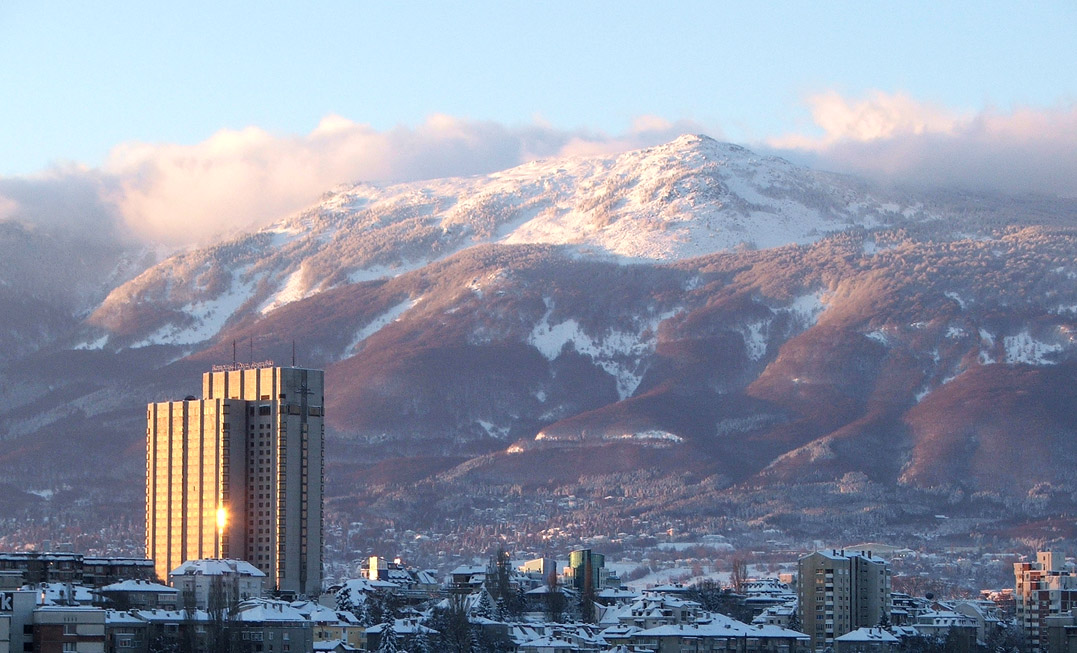
Vitosha is the mountain overlooking Sofia. On it, there are already a number of Ski lifts, but the company running the business (Vitosha Ski) have now admitted a new plan for legal approval. The new plan suggests 7 times more Ski lifts, and 260 hectares of protected land exploited.


Picture from wikipedia commons. Lincense: Creative Commons Attribution 2.0

This amount of ski pists involves numerous other installations, such as parking lots, an artificial lake for artificial snow for artificial skiing in artificial winters etc.

The investors have used a Gallup poll, to find that the Sofia population favours "clean paths" on Vitosha, whatever that means. The documents have not been published online but have been written about on e-vestnik.bg and the blog Spasi Vitosha (Save Vitosha).

Potential critics, like environmentalists or organisations representing other mountain activities than skiing, (e.g. hiking) have not been invited to comment on the plan. but they do, on the internet.


Sources : @zelenite


Wednesday, July 8, 2009

An epiphany

I usually take a walk around the office building for lunch. It is really too hot for that now, as the latter part of the walk is an uphill concrete landscape in burning sun.

Today I noticed that there was something strange going on. Cars were parkeed along the road, and there was a traffic jam, and plenty of policemen. And there were lots of busses parked. Old bussed. I asked one guy, a driver for a tv tema what was going on, and... Bulgarias new Prime minister, Bojko Borisov, had descended on our street to inaugurate a plenty of new busses.

The busses are suposed to replae the dead old buses on almost every line, I don't know how many they are, but I saw at least 30 with my bare eye, and a pleased bus driver said there was plenty. I asked him what he thought about Borisov and he said that new powers are almost welcome.

There was no doubt about the joy in the audience. A cleaning Roma laydy was so glad, she even told me it was the happiest day in her life "This is my boss! (She works for Sofia Municipality, Borisov was the mayor) "I have only seen him on TV, and now he is standing right here in front of me!"

New busses are badly needed, of course. It's a pity they were all diesel buses. I don't know Borisov's view on climate change or peak oil.

Wednesday, June 17, 2009

Syndicates demonstrated in Sofia

Yesterday, KNSB, the Bulgarian Association of free trade unions organised mass protests in the center of Sofia. The formal demands, as I understand from KNSBs website, was increased salaries for public employees.

The protests were huge by Bulgarian measures, 10 000 according to Darik, and an (un)educated guess is that there is a growing discontent in the working classes, due to the economical crisis that is starting to hurt also in Bulgaria by now. Another even less educated guess is that there are only two weeks until the parliamentary elections, and the trade unionists want to make themselves seen by whoever wins.

They are also not alone in the streets. Today hobby fishermen demonstrated, they want more influence over the legislation regarding fishing. Tomorrow other groups with an interest in using Bulgarian nature are to demonstrate. Natural allies to zelenite I would say...

Friday, May 1, 2009

1st of May clashes in Sofia

In addition to the tradtitional family friendly 1st of may celebration by the ruling socialist party BSP, Anarchists today staged a protest in central Sofia. It came to some violence with he police.

More info here

Source: Novinite.com

Wednesday, April 29, 2009

Protests today

At the moment of writing, protests are going on in central Sofia, and in Varna.

Of course there are many grievances behind the protest, and a general disenchantment with Bulgrian politics and politicians. The proposal that triggered the demonstrations was the proposal of a new law on demonstrations.

Bulgaria e nasha has posted a clarificance, why the students and bloggers protest against this law. Summary:

The problems with the law are:

  • The extension of the demanded pre-announcement from 2 to 5 days. This will, obviously, hamper the possibility to mobilize quickly in acute moments.
  • The ban on protests in front of buildings from where the state is run. Protesters will be envisaged to other places like parks. Nice place for a protest in deed, but when the aim of the protest is not present, the effect will likely be less.
  • The mayor gets too wide mandate. Anumber of subjective motives, like fear of violent outbursts, suspicion that state security is endangered etc. gives the mayor the right to one-sidedly cancel protests.

The protest was announced by SROKSOS. Bulgaira e Nasha and Forthenature also stands behind it.

Source: Bulgaira e Nasha

Monday, April 27, 2009

Demonstration Saturday 11:00

On Wednesday 11:00, the student's organisation SROKSOS will arrange demonstrations in front of the parliament in Sofia, and in front of the main court in Varna.

The demonstration is a protest against the recent changes in the election laws, that SROKSOS sees as a game with the democracy. "In Bulgaria democracy is still nothing but a facade" Rymen Sahariev was quoted in Mediapool.

The protest is open for all free thinking citizens the article states. Unemployed workers from the Kremikovtzi plant are regularly holding protests at the same spot, and the two protests are likely to unite on Wednesday.

Source: Mediapool.bg

Thursday, April 23, 2009

Afternoon 23/3 09 - Restrictions of protests?

  • The Bulgarian Governement prepares a law to restrict protests
  • SROKSOS calls for protest against this law 29/4
  • Meeting to discuss business development in Studenski Grad
During the spring movement in central Sofia has often been blocked by numerous protests - except for students and environmentalists, unemployed workers, farmers and others have increasingly taken to the streets.
From the government a law is now being prepared that would restrict the right to protests, and maybe more important - make the protests dependent on the consent of the very people they protest against. The law would prescribes that The Ministry of Interior and the local authorities in commune mark certain areas as forbidden. These areas would be around military installations, and, of course, in front of the presidency and the parliament.
The law would also ban the use of animals or vehicles. The protesting farmers have made use of French style protests with tractors and cows. These would not any more be allowed.
After critique from the Europan Council a possibility to appeal to the administrative court has been added to the proposal. This process would take time. Also, any proposal to demonstrate would have to be handed over to authorities at least five working days in advance, which would exclude flash mobs in central Sofia.

Sources: Dnevnik, dnes.bg, Bulgaria e Nasha


In the protest blogs of SROK SOS and Bugaria e nahsa, the proposal is highly unwelcome. SROK SOS calls for a demonstration agianst the right to demonstrate on Wednesday 29/4, 11:00 in front of the Parliament.

Source: SROKSOS


SROKSOS also announces a meeting including students and theh main architect in Sofia, Peter Dikov 22/4. The meeting will discuss commercial deveolpment in Studentski Grad. Studentski Grad is an area with dormitories that also hosts a Wild West like Night Club life.

Source: SROKSOS

Thursday, March 12, 2009

Garbage

 The streets of Sofia are filled with garbage this week. Garbage has been a major issue between the Bulgarian socialist government and Bojko Borisov, the mayor of Sofia, for a long time. This is the last row in a conflict, where both sides claim that the other is responsible.

 The entrepeneur responsible for cleaning Sofias, Novera, claims that the city of Sofia has not fulfilled its obligations regarding payments. The contract runs out 1st of April. Novera refuses to work since three days. According to Darik, the streets in front of the presidential palace are clean, though.

 The municipality have appointed a working group, promising to solve the situation in two days.

 The response from "Pisna Ni!" a news site close to the protesters is to call for civil disobedience in case the situation is not resolved in two days. The proposed action is to take garbage form the streets and put it in front of the parliament.

Citizens that think that Borisov is guilty, not the government, can put their garbage in front of his office in stead, Pisna Ni! says.

Source: Bulgaria e nasha
 

Wednesday, February 25, 2009

50 protesters

Around 50 participants took part in todays protest, showing their despise for the government throughthrowing shoes at the parliamentary building.

According to Darik, the environmentalists did not take part in today's protests, and the dmenad of the protesters was the resignation of the government.


A video is available at News.bg.

Sources: Darik Online, News.bg

Wednesday, February 18, 2009

Eleonora Nikolova asks for parliamentary probe into builiding in Studentski Grad

The independent MP Eleonora Nikolova has asked for a parliamentary probe, that looks into building process in Studentski Grad, to see if they are legal or not.

The student protests in Sofia began after the death of 20 years old Stojan baltov outisde an allegedly illegaly built discoteque Amnesia in Studentski Grad.

Source: Darik.bg

Wednesday, February 11, 2009

Demonstration in Sofia 11/2

Around 100 protesters have gathered in front of the parliametnary buildingin central Sofia today. According to Darik their main demand is the resignation of the government: Darik also refers to their demands for citizen control of society. I presume that these are the same that i have referred to earlier as a new social contract:
  • a legal state,
  • citizens' participation in decision making through local referendums, the possibility for citizens to initiate lawmaking and a proportional electional with preferential vote without restrictions
  • guaranteed freedom of speech
  • ecological responsibility
  • real European integration in Bulgaria
News.bg intervew Rumen Zahariev, student who says that they have gathered at 12.00 to control wether the MP's go to work.

News. BG tries to press mr. Zahariev on why the numbers of protestors seem to decline, and if he as a protestor sees Bojko Borisov as an alternativ to the current government, after Borisovs statement in Chicago that the biggest problem in Bulgaria is the human material.

Zahariev responds that it is important to devolp the preservence in Bulgarian society adn that the Bulgarian people is the countryäs strongest asset.


See my sources for pictures
Sources: Darik, News.BG

Wednesday, January 28, 2009

Protests continue today

The oragnizators of the protests call for demonstrations today in Sofia 15.00 and Varna 16.00.

Ther are no news in the press about expected number of participants. My guess that they will be last than last week, as the topic is not so present in media as earlier. In Sofia, however, the streets will be blocked for traffic, indicating that at least a few hundered protestes are expected.

According to earlier statements, the demonstrators today will evaluate the politicians acts of dialogue, and in case they find them insufficient initiate a campaign of disobedience. What this campaign might include i ahve so far been unable to find out.

On Bulgaria e Nasha blog a statement is published in addition to the call for demonstrators:

Protesters ask for:

  1. the governments resignation
  2. a national campaign of civil disobedience
  3. the initiating of a new "social contract"


  • The new social contract should be based on these principles:
  • a legal state,
  • citizens' participation in decision making through local referendums, the possibility for citizens to initiate lawmaking and a proportional electional with preferential vote without restrictions
  • guaranteed freedom of speech
  • ecological responsibility
  • real European integration in Bulgaria


(The poster calling for protesters)


Note: All translations are my own and done hastily. They might contain all kinds of mistakes

Wednesday, January 21, 2009

1 200 demonstrators

Bulgarian media offer have different opinions about the number of participants.

Darik.bg still claims 400 protesters (last edit 17:19)
News.bg claims 1 200 protesters (last edit 17:52)

Bulgaria e nasha already posted a summary of the protest. The blog is in Bulgarian, but contain fresh pictures

They say that less people attended than one week ago, and the most heard demand was the resignation of Minister of interior affairs Michail Marinov. The protestors sees him as responsible for the violence 14th of january, and for the deah of Metodi Marinov in custody 15th of January. this scandal is as far as I understand not connected directly to the protests the same 24 hours.

As last week music was played an important part of the protest, with Scorpion's Wind of Change as alead melody.

Sunday, January 18, 2009

Press summary

Here aare my summaries of two newspaper articles covering the protests, covered earlier in this blog.

The Guardian
look at the protests from a European connection, and link them to the global financial crisis. Much attention is payed to the situation in Romania. I'm uncertain how much of this that applies to Bulgaria. Unlike Romania, Bulgaria have no car industry and the currency is tied to the Euro which make it more stable then the Leu.

A political and economical crisis is likely to unleash many different forces though, and I appreciate the always valid warning for increased ethnic tensions.


The Kapital article (p. 18-19, Kapital 17-23 January 2009) looks at the protest from the ent. But they ask for political leadership, which they claim is necessary to take the protests frostandpoint of established Bugarian society. The article shows a great understanding for the protesters grievances, after all it is one of the most outspoken voices against the governmm noice in the streets to actual change.

The article contains some interesting ańalyzes of the reasons bhind the protests. Purely ecnomical reasons are absent from Kapital's experts explanaitions. in stead they point on a feeling of being lied at and stolen from from the political class.

Kapital also takes up the pivotal role that Web 2.0 tools like various forums and Facebook played in the organization of the protests. "The net turned into a tribune for non censored dissatisfactions" the newspaper claims

Sofia 18 January

Protests were carried out in front of the parliament also today. The protestants symbolically "planted"carnations in front of the parliament to remember democracy.

No protests are planned out by the organizers the coming two days. Tonight the groups are meeting to discuss and consolidate their demands before next Wednesday when a new demonstration is planned.

This will be a shortened, more media friendly version of the 35 demands already stated, but the essence will be the same: Political action in the field of education and the social sphere, kept promise to the farmers and reforms of the parliamentary system.

At the demonstrations protesters have asked for the sitting socialist governments abdication. This demand is said to be strong among the students, but it is unclear if it will be one of the demands put forward on Wednesday.

The organizers will make sure to reach out to media with their demands in good time before the demonstrations start on Wednesday, fearing that they otherwise will drown among pictures of violent clashes, much like happened last week.

The organization Napred (Forwards!) , a opposition group with nothing to do with the protests in front of the parliamenthave also staged a protest today, and personally handed overtheir demands to open the closed nuclear reactors in Kozloduj. I have no intention to cover these protests on my blog.

The Guardian

today published an article in their online version about increasing discontent in Eastern Europe. As always I warmly recommend the Guardian, even if I think this article describe a kind of worst case scenario.