In an earlier post I pondered over the fact that violence against roma minorities seemed to be a on the rise in comparatively well-developed central Europe than in poor southeastern Europe. unfortunately I was not right.
Cotidianul reports in a long well written feature article how the Hungarian population in Hargitha attacked their roma neighbours armed with clubs, axes and spades. Unfortunately no one died this time. Hopefully no one will.
Hargitha is a village in the transylvanian part of Romania. it is populated with hungarians, romanians and roma. Of course all groups have a list of complaints about the other. But it is the roma that get hunted with clubs. Society should not try to place blame, but prevent any kind of violence.
Showing posts with label Romania. Show all posts
Showing posts with label Romania. Show all posts
Friday, August 21, 2009


Monday, August 3, 2009
Roma woman killed in Hungary. Not in Bulgaria.
Romanian media reports that a 45 year old woman was shot dead and her 13 year old daughter severly wounded yesterday in Hungary. Becasue they were Romas.
It is an enormous tragedy for all families involved, and for the Hungarian nation,of course. It is also a sad news, following similar stories. Roma people, just like Moldovan's turn to Canada as one of the few liberal haven's in the world, not because of povert, then they would go to Paris or Berlin, but because the increased violence agaisnt them in Czech republic.
The Slovak police was humiliated when the humiliation of two roma boys was filmed and spread online. Look at the guys in the film. It looks like this is not the first time they enjoy this entertainment. The video has been REMOVED from both Youtube and Euronews. Youtube blames the undue discussion... couldn't the comments be removed in stead of this very important witness to Europe of today?
It could happen everywhere, of course. The thing is that it doesn't. It doesn't happen in Bulgaria. This kind of reports reach us almost daily, but they don't come from Europe's poorest countries. They come from central European countries, countries that are way ahead of Bulgaria in GNP, civil society development etc. Wolfram Alpha suggests that Hungary's GNP is three times bigger than Bulgarias,just to give a number. (Wolfram Alpha's numbers most likely refer to CIA factbook)
I think it is of outmost importance for everyone, to consider this issue: Why is violence against Roma exploding now, in the most developed parts of ex-communist Europe.
Is Bulgaria more tolerant towards roma? First of all - there are at least as many Roma in Romania or Bulgaria as in Central Europe.
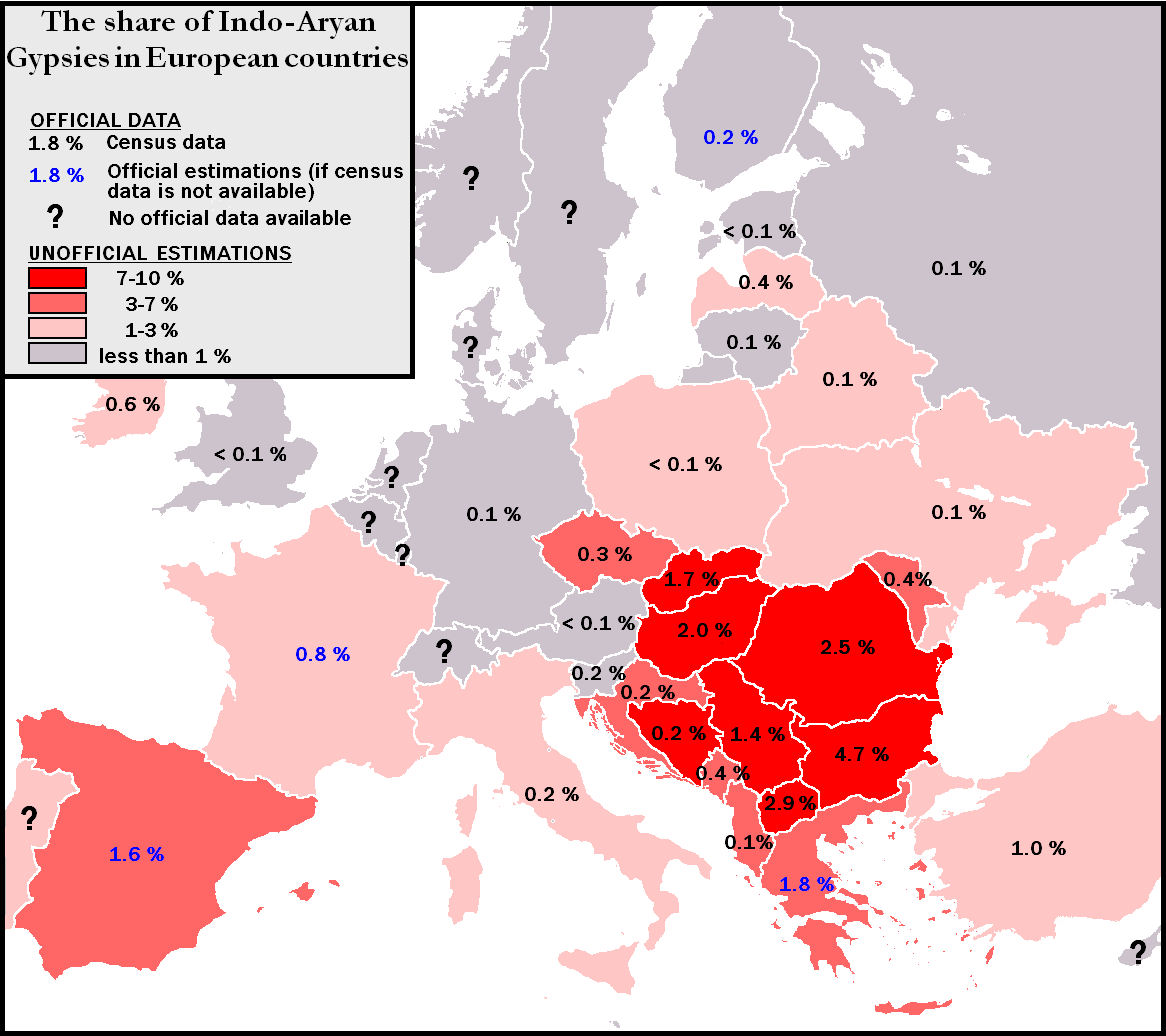
(Picture belongs to Wikipedia Commons)
The first thing a new visitor in Sofia sees are horse carts with roma picking trash. Bulgarians don't do that. Roma don't work in offices. They live encapsulated, and are discriminated in numerous ways. Yet physical violence against Roma is rare, and very few Bulgarians would approve of it, in spite of a strong fascist presencein the parliament.
Anyone that has seen films like Time of the Gypsies or Gadjo Dilo, knows that the relations between Roma and the majority population is far from easy even in these countries
(Footage from Gadjo Dilo)
Yet, these tensions do not turn as nasty as in Central Europe, at least not for now.
Is the economical crisis more severe in Central Europe? Maybe it is. Bulgaria is hit late, and large chunks of the economy are not really for real. The crisis might also seem less critical if you fall from a lower level. (see GNP numbers above). But yet, this is a simplification worthy of dogmatic marxism. If unemployment and poverty in itself generated violence, there would be plenty of violence here. My own experience tells me the opposite.
Maybe the key to understand this kind of violent frustration is in the progress itself. Maybe it is Central Europe's higher GNP, and more developed societies that generate the violence?
We have seen in history how societey turns explosive not in times of absolute depression, but in time of rapid development. Consider the Russian revolution, the -60's or the french revolution. I don't think Bulgaria is remarkably tolerant towards roma. But there is probably a remarkable tolerance towards poverty here. The horse carts are still natural parts of Bulgarian cities. And the roma are still pleased with what they get.
If Bulgaria, and Romania, continues developing like the countries have done until now, which would be a wonderful thing, within a generation there would exist a generation of romas who go to university, and start asking for the same jobs as Bulgarians. That will be an explosive situation.

It is an enormous tragedy for all families involved, and for the Hungarian nation,of course. It is also a sad news, following similar stories. Roma people, just like Moldovan's turn to Canada as one of the few liberal haven's in the world, not because of povert, then they would go to Paris or Berlin, but because the increased violence agaisnt them in Czech republic.
The Slovak police was humiliated when the humiliation of two roma boys was filmed and spread online. Look at the guys in the film. It looks like this is not the first time they enjoy this entertainment. The video has been REMOVED from both Youtube and Euronews. Youtube blames the undue discussion... couldn't the comments be removed in stead of this very important witness to Europe of today?
It could happen everywhere, of course. The thing is that it doesn't. It doesn't happen in Bulgaria. This kind of reports reach us almost daily, but they don't come from Europe's poorest countries. They come from central European countries, countries that are way ahead of Bulgaria in GNP, civil society development etc. Wolfram Alpha suggests that Hungary's GNP is three times bigger than Bulgarias,just to give a number. (Wolfram Alpha's numbers most likely refer to CIA factbook)
I think it is of outmost importance for everyone, to consider this issue: Why is violence against Roma exploding now, in the most developed parts of ex-communist Europe.
Is Bulgaria more tolerant towards roma? First of all - there are at least as many Roma in Romania or Bulgaria as in Central Europe.
(Picture belongs to Wikipedia Commons)
The first thing a new visitor in Sofia sees are horse carts with roma picking trash. Bulgarians don't do that. Roma don't work in offices. They live encapsulated, and are discriminated in numerous ways. Yet physical violence against Roma is rare, and very few Bulgarians would approve of it, in spite of a strong fascist presencein the parliament.
Anyone that has seen films like Time of the Gypsies or Gadjo Dilo, knows that the relations between Roma and the majority population is far from easy even in these countries
(Footage from Gadjo Dilo)
Yet, these tensions do not turn as nasty as in Central Europe, at least not for now.
Is the economical crisis more severe in Central Europe? Maybe it is. Bulgaria is hit late, and large chunks of the economy are not really for real. The crisis might also seem less critical if you fall from a lower level. (see GNP numbers above). But yet, this is a simplification worthy of dogmatic marxism. If unemployment and poverty in itself generated violence, there would be plenty of violence here. My own experience tells me the opposite.
Maybe the key to understand this kind of violent frustration is in the progress itself. Maybe it is Central Europe's higher GNP, and more developed societies that generate the violence?
We have seen in history how societey turns explosive not in times of absolute depression, but in time of rapid development. Consider the Russian revolution, the -60's or the french revolution. I don't think Bulgaria is remarkably tolerant towards roma. But there is probably a remarkable tolerance towards poverty here. The horse carts are still natural parts of Bulgarian cities. And the roma are still pleased with what they get.
If Bulgaria, and Romania, continues developing like the countries have done until now, which would be a wonderful thing, within a generation there would exist a generation of romas who go to university, and start asking for the same jobs as Bulgarians. That will be an explosive situation.
Sunday, June 7, 2009
Romania...
I was invited by my friend/blogging colleague Maria Nenova to participate in a Blog game of associations. The theme is to think about countries, and Maria asked me to write about what I associate with Romania. Thanks for the opportunity, Maria!
One of the things that has changed most in the last three years in my life, except for meeting the love of it, is my perception of Romania. In Sweden, Romania meant post-communist and poverty. I remember maltreated orphans, and the mineriads. It was all very strange to me. But Romania been strange alos to people older than me.
While Bulgaria's Todor Jivkov still doesn't strike me as anything more than a boring man in a suite, like Honnecker or Breznjev, Ceaucescu was this kind of thrilling third world dictator.The kind of dictator you meet ine Garcia Marquez's and Vargas Llosa's novels. His wife with a million pair of shoes, his faraonic building projects, his megalomania and his horrible end, shot like a dog and broadcasted around the world. It was all so terrifying and fascinating.
Then I went to Moldova, and over a night, Romania became the symbol of Europe. I think Bulgarians also remember this night, the new years night between 2006 and 2007 when Romania and Bulgaria joined the EU. I celebrated it in Moldova, with a family where about half of the members had Romanian passports. They were dancing and singing right out in the air: "We are in Europe!" "We are in Europe!". The other half were much less agitated. For them this new year marked the first when they needed a visa even to go to Bucharest, or to the closer Iasi.
In Moldova I learned Romanian, and I still flirt with it. I like to play with the diftongues and pronounce slightly outdated words from Mercia Eliade's novels. I was working at a voluntary project that was closed most of the time, so I had plenty of time to learn. I wanted to also study Russian, but I didn't manage. It's a pity really... I don't think you can fully appreciate Moldova without knowing both Russian and Romanian.
In the spring I had, like all foreigners in Moldova have, some problems with my permission to stay. The deal was that I had to leave the country for Iasi, stay in Romania 24 hours and then return. I was madly in love at the time. I left Moldova with my Bulgarian girlfriend as she had made her first visit there. These 24 hours in Iasi were a fantastic adventure. There were lowers everywhere. A much more relaxed atmosphere than in Chisinau. It's a student's city so there were bookstores and cafes everwhere... so much of everything. And it was all in Romanian!
I had actually decided to stay in Romania, but eventually I didn't. I returned to Moldova to finish my project. Since then, crossing the border between Moldova and Romania always made me feel a little, just a little, bit more at home.
I went to Bulgaria, and to be frank I think my Bulgarian is better than my Romanian by now. A Bulgarian passport is as good as a Romanian or a Swedish, so the glory around Romania has somehow faded. But still... Romania has a place in my heart :)
I don't want the game to die with me, so I pass the ball to Svetla Encheva, author of the Neyioten blog. I would like to read Svetla's thoughts about Moldova.
And I will try to take athe game abroad, and ask two Swedish bloggers, I want to ask my friend Jimmy what he thinks about France, and the profilic left wing blog Svensson that I follow with interest how he percieves Russia
One of the things that has changed most in the last three years in my life, except for meeting the love of it, is my perception of Romania. In Sweden, Romania meant post-communist and poverty. I remember maltreated orphans, and the mineriads. It was all very strange to me. But Romania been strange alos to people older than me.
While Bulgaria's Todor Jivkov still doesn't strike me as anything more than a boring man in a suite, like Honnecker or Breznjev, Ceaucescu was this kind of thrilling third world dictator.The kind of dictator you meet ine Garcia Marquez's and Vargas Llosa's novels. His wife with a million pair of shoes, his faraonic building projects, his megalomania and his horrible end, shot like a dog and broadcasted around the world. It was all so terrifying and fascinating.
Then I went to Moldova, and over a night, Romania became the symbol of Europe. I think Bulgarians also remember this night, the new years night between 2006 and 2007 when Romania and Bulgaria joined the EU. I celebrated it in Moldova, with a family where about half of the members had Romanian passports. They were dancing and singing right out in the air: "We are in Europe!" "We are in Europe!". The other half were much less agitated. For them this new year marked the first when they needed a visa even to go to Bucharest, or to the closer Iasi.
In Moldova I learned Romanian, and I still flirt with it. I like to play with the diftongues and pronounce slightly outdated words from Mercia Eliade's novels. I was working at a voluntary project that was closed most of the time, so I had plenty of time to learn. I wanted to also study Russian, but I didn't manage. It's a pity really... I don't think you can fully appreciate Moldova without knowing both Russian and Romanian.
In the spring I had, like all foreigners in Moldova have, some problems with my permission to stay. The deal was that I had to leave the country for Iasi, stay in Romania 24 hours and then return. I was madly in love at the time. I left Moldova with my Bulgarian girlfriend as she had made her first visit there. These 24 hours in Iasi were a fantastic adventure. There were lowers everywhere. A much more relaxed atmosphere than in Chisinau. It's a student's city so there were bookstores and cafes everwhere... so much of everything. And it was all in Romanian!
I had actually decided to stay in Romania, but eventually I didn't. I returned to Moldova to finish my project. Since then, crossing the border between Moldova and Romania always made me feel a little, just a little, bit more at home.
I went to Bulgaria, and to be frank I think my Bulgarian is better than my Romanian by now. A Bulgarian passport is as good as a Romanian or a Swedish, so the glory around Romania has somehow faded. But still... Romania has a place in my heart :)
I don't want the game to die with me, so I pass the ball to Svetla Encheva, author of the Neyioten blog. I would like to read Svetla's thoughts about Moldova.
And I will try to take athe game abroad, and ask two Swedish bloggers, I want to ask my friend Jimmy what he thinks about France, and the profilic left wing blog Svensson that I follow with interest how he percieves Russia
Friday, September 5, 2008
Europan Commission aggrees with Italy to register Roma families?
If you followed this blog, you might have read my earlier posts about the social situation in italy involving mainly Romanian romas and Berlusconi cops...
The Berlusconi have issued a set of laws aimed at limiting illegal immigration to Italy. These include the collection of finger prints, personal data, the possibility to expell EU-citizens for so-called security reasons, the possibility of detaining EU citizens for 15 days and the restriction of asylum seekers´ freedom of movement.
These means not only go against what I presume a broad majority of world citizens accept as human rights, but also the EU treaties, and Italy has gotten their share of anger from different Eu institutions.
However, today I read on a romanian news site, that the EU Commission and the Italian state has reached an agreement on a somehow less offending version. It´s horrible. EU is a system where the higher levels of political power has more power than in traditional parliamentary system. The only reason I could see for accepting that is that these higher levels shopuld stick to law and morale also in times when paliamentary politicians might be prone to compromises them in change for votes. In times like these for example...
I promise to dedicate this blog to this subject for a while ahead, and give you links in different languages as I found them.
P.s. Swedish readers might draw a parallell to the Swedish "FRA" law for supervising messages sent over the Internet, that also was accepted in a slightly less offensive version. FRA is bad, but this is worse...
----------------
Now playing: Fatima Spar und die Freedom Fries - W
via FoxyTunes
The Berlusconi have issued a set of laws aimed at limiting illegal immigration to Italy. These include the collection of finger prints, personal data, the possibility to expell EU-citizens for so-called security reasons, the possibility of detaining EU citizens for 15 days and the restriction of asylum seekers´ freedom of movement.
These means not only go against what I presume a broad majority of world citizens accept as human rights, but also the EU treaties, and Italy has gotten their share of anger from different Eu institutions.
However, today I read on a romanian news site, that the EU Commission and the Italian state has reached an agreement on a somehow less offending version. It´s horrible. EU is a system where the higher levels of political power has more power than in traditional parliamentary system. The only reason I could see for accepting that is that these higher levels shopuld stick to law and morale also in times when paliamentary politicians might be prone to compromises them in change for votes. In times like these for example...
I promise to dedicate this blog to this subject for a while ahead, and give you links in different languages as I found them.
P.s. Swedish readers might draw a parallell to the Swedish "FRA" law for supervising messages sent over the Internet, that also was accepted in a slightly less offensive version. FRA is bad, but this is worse...
----------------
Now playing: Fatima Spar und die Freedom Fries - W
via FoxyTunes
Tuesday, June 24, 2008
Romania - In a train going west
In Romania, local elections have attracted much attention, since they show the relative strength between the liberal president Basescu and his political opponents. In the most important local election of all- the capital Bucarest, ex-socialist Sorin Oprescu recently beat Basescus ally. Basescu himself has had a very high profile, claiming to break down the ruling class that remained the elite when the turbulence 1989 was over.
Ana Blandiana, a proponent of this movement describes Romanias', as well as its neighbour countries post communistic history like a westbound train. The world passes by outside the window as it approaches Bruxelles, or wherever... but inside the train coupe nothing has changed. The same people that were Securitate Agents are now in different political parties, paying lip service to democracy without caring about human rights.
Basescu has done more than any other Romanian politician to change this situation, for example he tried to change the electoral system into a majority system in stead of a proportional one, in order to deal a fatal blow to the established structures of power. Given the strenght of his opponents his rule is rather contested, and during long periods he has been in a deep cconflict with the Romanian parliament, as well as with the courts.
Basescus fight to clean up inside the westbound train is in deed a noble one, but he has also made himself famous for doing it in a rather autocratical manner, and critics have pointed out his own flaws, e.g. corruprtion. This might be an easy accusation to shake off when it comes from his post-communist enemies, and one might agree that it takes a good deal of decisive use of power to straighten out a crooked society. On the other hand - the logic that an omelette demands the cracking of a few eggs has often taking humanity into inhumanity...
I far from have the knowledge to explain this... instead I advice readers to these wikipedia sites:
Traian Basescu, Romanias liberal president
Sorin Oprescu, the current mqayor of Bucuresti, to whom basescu is a dedicated enemy
Ion Iliescu, socialist ex-president, arch-enemy of Basescu and regarded as a symobl of the ruling elite
Ana Blandiana, a proponent of this movement describes Romanias', as well as its neighbour countries post communistic history like a westbound train. The world passes by outside the window as it approaches Bruxelles, or wherever... but inside the train coupe nothing has changed. The same people that were Securitate Agents are now in different political parties, paying lip service to democracy without caring about human rights.
Basescu has done more than any other Romanian politician to change this situation, for example he tried to change the electoral system into a majority system in stead of a proportional one, in order to deal a fatal blow to the established structures of power. Given the strenght of his opponents his rule is rather contested, and during long periods he has been in a deep cconflict with the Romanian parliament, as well as with the courts.
Basescus fight to clean up inside the westbound train is in deed a noble one, but he has also made himself famous for doing it in a rather autocratical manner, and critics have pointed out his own flaws, e.g. corruprtion. This might be an easy accusation to shake off when it comes from his post-communist enemies, and one might agree that it takes a good deal of decisive use of power to straighten out a crooked society. On the other hand - the logic that an omelette demands the cracking of a few eggs has often taking humanity into inhumanity...
I far from have the knowledge to explain this... instead I advice readers to these wikipedia sites:
Traian Basescu, Romanias liberal president
Sorin Oprescu, the current mqayor of Bucuresti, to whom basescu is a dedicated enemy
Ion Iliescu, socialist ex-president, arch-enemy of Basescu and regarded as a symobl of the ruling elite
Subscribe to:
Posts (Atom)