Showing posts with label Europe. Show all posts

Wednesday, July 24, 2013

Bulgaria is burning

I have been planning to write something about the anti-governmental protest in Bulgaria for a while - after last night's events I feel I have to get it done.

In February Sofia witnessed massive street protests against the government, initiated by expensive heating bills. The center-right-populist GERB government quickly resigned and called new elections. These elections were carried out on 12th of May. GERB got the largest vote, but was unable to form a government, thus a technocrat government was elected, dominated by BSP (socialist) and DPS (representing the Turkish minority).

When the infamous media mogul (think a teenage Robert Murdoch) Delyan Peevski, with an impressive and well known CV of murky business was appointed head of the State Agency for National Security, Sofia's streets were again filled with protesters, asking for the government to resign. Last night (23/7 2013) protestors surrounded the parliament and prevented MP's from leaving, which lead to a night of tumultuous scenes, 2 injured policemen and 15 injured protesters.

Judging from the TV scenes, it seems that the police were far from controlling the situation, and that most of those hurt were innocent bystanders or doing non-violent resistance, for example sitting down in the way of vehicles. The number of injuries would have been way higher if the crowd had not showed an impressive self-restraint.
Septemvri 1925
The protests had so far been massive, with tens of thousands of people attending, peaceful and innovative - with arty flash mobs, coffee drinking, bike- and marathon protests. They have called for the resignation of the government, amends in the election law and expressed a general disdain for the Bulgarian political class in general, and more specifically the socialists, seen as non-reformed communists, decidedly pro-Russian.

There has also been a strong emotional sentiment. I think many Bulgarians feel offended by the way the politicians did business-as-usual when appointing Peevski, at a time when Bulgarians expected a profound change for the better, and by the arrogant way the government has ignored the protest during the last month.

As a left leaning European it would be tempting to connect this eruption of popular discontent with the anti-austerity protests showing up from time to time in Spain, Greece, Portugal and Italy. (And maybe even Tunisia and Egypt...) That is hardly true. Economic grievances have not been on the agenda in these protests, and when it is it is actually pro-austerity resistance against the government's budget proposal.

On the contrary, a very vocal group among the protesters have been right wing libertarians. This has caused some bad blood and make someone like Petar Volgin, one of the very few public left wing voices in Bulgaria condemn the protests. But it is more than obvious that the belief in Ayn Rand's fairy tale world is not enough to drive so many Bulgarians into the streets for so many days. This is a people that is angry,  not a right wing coup, as some people complain.

Less leaning commentators have connected the protests with those in Brazil and Turkey, and there is probably more to that theory. Just like in these countries, the protests in Bulgaria is dominated by young, well educated, middle class people in Sofia, even if they have a far wider support. They are people who live modern lives in states less modern, who have started to demand a state that is less corrupted and more reliable.

Another all too obvious comparison is with the colour revolutions in Ukraine, Georgia etc. during the 2000's. When I lived in Bulgaria in 2007 i told people about Moldova, and the Bulgarians asked me if Moldova hadn't yet had its colour revolution. Moldova did, and now the Bulgarians find themselves in the streets shouting "maffia!" at redressed communists who enjoy the spoils of private enterprise but are less sanguine about European values, or markets that actually work.

The track record of the colour revolutions is not very inspiring - neither Ukraine, Moldova or Georgia is much closer to Europe or a real democracy now than they were in 2005 or 2000. But it is probably also a miscalculation by Bulgarians to stress the similarities between Bulgarian socialists and Yanukovich in Ukraine. Bulgaria is an EU member, and Russia could never play the role in Bulgaria that it can play in Ukraine.

Moreover, the Bulgarian socialists may be throughout corrupted, but there is hard to see anything totalitarian about Bulgaria. Bulgaria is not facing a state that owns the oligarchs, as Russian dissidents do. They face a state that is owned by private business, which is more like a perverted version of west European politics.

Due to the violence yesterday the parliament is closed today, but tomorrow it will take up work again, and some sort of protests will most likely resume. Hopefully they will continue in the peaceful vein of the first 40 days.

Will they succeed? Yes. No. And yes. I am convinced the government will eventually resign, probably after preparing their comeback with hand outs like economical benefits to the part of the electorate that is rather distanced from the protests in Sofia, that will suffer most from the next right wing government, be it GERB or some of the other parties that are more popular among the protesters.

The political culture in Bulgaria will not be much different in 2015 from what it is now. If the oligarchic model is to be challenged, the economical interests of the oligarch's must be hurt, and to do that would take a more vigilant grass root political environment, running their own parties, their own media. It will take time, but the protesters have so far shown a lot of persistence.

So yes... After these protests, Bulgaria will not be the same, even if the politicians are. Whatever happens after the resignation of the government, many of those that are currently in the streets will feel that there are more steps to be taken. Petar Volgin has lamented the lack of an intellectual left in Bulgaria, but it might just be the birth of it that we are witnessing now. In the streets people come together in a decidedly un-libertarian act of political action. They are fighting for their society, and when the first obstacle - the government, is overcome, they will continue to fight for it.

Tuesday, June 14, 2011

Hypocrisies

Swedish local communities can veto against wind power - but not against oil drilling. What is fair about that?

Vindkraftverk

Monday, May 30, 2011

Let Germany save us all

As it happens in democracies, events in the real world affects German politics. After being severly punished in the state elections, Merkel's liberal right governement changed its mind on nuclear power, and decided to honour the previous government's promise to close all German reactors by 2022.

Nuclear power plant blue

It is easy to hold strong opinions about nuclear power. In spite of the fact that influential green thinkers such as James Hansen and James Lovelock both advocate nuclear power as the best/only way to maintain civilisation without fossil fuels. True as they might be, what Lovelock and Hansen are talking about is the so called fourth generation of nuclear power. These plants theoretically solve a host of the problems today's plants create. Like the waste issue - in stead of building an enrourmous pile of potentially lethal waste, these plants promise to reuse the waste as fuel, until it is not dangerous any more. Which sounds great if it works. We might have no choice but to try.

The facilities that are to be closed down in Germany are nothing like this though. They are old and problem torn. Any one who believes in nucelar power should be glad to see them closed. The industry, however seems more eager to run them as long as they are profitable before building next generation plants, which is the core of the nuclear problem. Nuclear power could maybe be safe in the hands of scientists like Lovelock and Hansen, but any CEO will treat it as just another souce of large and safe income which makes him relunctant to renew it.

The reactions in Sweden, and elsewhere in Europe, to the German U-turn is shock and fear. The major newssource Dagens Nyheter claims that the price of electricity will double if the decision is carried through. Interstingly, most people interviewed in the article does not think so, but DN chose that headline. For some reason, that is what they want readers to believe.

Let us for a moment presume that it is true. Prices on electricity will double. Everyone agrees that we need to save energy - wouldn't a drastic price hike be the best way to create energy prudence? Wouldn't it drastically increase the profitability of renewable energy?

For sure it would, and the way things look right now it would be a blessing. The Swedish energy authority forecast Sweden's energy useage to keep growing until 2030. If that happens, what chances do we have to lower co2 emissions? None. Any positive development would require a shock therapy. If the decision in Germany doubles prices in Sweden - we ought to thank he Germans for saving our future. Unfortunately, it is so much easier to whine about higher prices, than to realize what problems low prices create.

IN the real world it is unlikely that the German decision will have so drastic consequenses, and it is still far from fait accompli . Merkel's decision must first be approved in the parliament, where it will come under fierce critizism from the industry and politicians. It will be intersting to see who comes out as the winner in the end - Europe's strongest civil society or an infamous industry.


I

Tuesday, November 10, 2009

Yesterday - a day to remember.

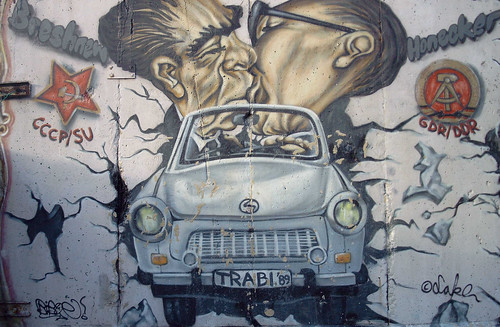
Yesterday Germans and Europeans celebrated the fall of the Berlin wall 20 years ago. While one could argue against the single minded focus on DDR here in Sweden, at the expense of other ex-conmmunist countries, there is no doubt that this is a date to remember.


Picture from creative commons, credits to backkratze


The wall was a very strong symbol for the Europe that once existed on both sides of it. The Sex Pistols sang about it. So did the Swedish punks Ebba Grön. And its fall  was probably the strongest symbol of a revolution we all lived through, in one way or another. I am no doubt west european, but we also lived through this period in history, albeit on the other side of things.

20 years later one can pretty much choose between seeing how much has changed - the maladets! blog itself is an evidence of an european continent without efficient borders*. One could likewise despair how little has actually changed. In spite of Moldova not existing 20 years ago, the newly ousted president Voronin did, and held executive powers in the soviet republic Moldova.

Yes... the post-sovietic countries didn't develop as quick or in the ways that the world expected 1989. Old elites managed to stay in power, but history didn't rest. The last couple of years we have seen progressive upheavals in several countries with less than perfect democracies - Ukraine, Georiga, Moldova and I would say also Bulgaria, even if the revolution took place in a normal election.

These revolutions were driven by the strongest force in life - youth. Eastern European countries now see the first generation born after communism mature, with new expectations. They carry on the good work  their parents did 20 years ago, and I think these Europeans are the one's we should remember now.

This post goes out to you, Bulgarian bloggers, environmentalists, Moldovan peaceful democracy protesters and all other heroes I never had the chance to meet.

*There are bordes, but they apply only to those with the wrong passport. The border between Moldova and Romania is open for me, while closed for Moldovans.

Sunday, September 13, 2009

Freedom Not Fear 2009


Today internet users and vanguards of democracy all over the world mark the Freedom not fear campaign day - against legislative ideas in different countries like Sweden, France, Germany and Bulgaria to store data about citizens' internet use.

Behind the protest stand a wide range of people - in Bulgaria Zelenite and many others protest - in Sweden every single political party have representants talking at todays event. Which makes one wonder who actually wants these measures.

I find this pattern scaring - governments might seem these measures as necessary, but noone wants to defend them in public. Which gives us a kind of policy that lives its own life, that noone wants to take responsibility for.

There are many blogs that cover this topic better than maladets! - when it comes to electronical rights I always reccomend the Free Software Foundation and the Electronic Frontier Foundation. Nonetheless, as an internationally minded blogger I can not abstain from stating my solidarity. A free internet outside policial control is the spine of a vital democracy.

Considering governments in countries like China, Iran and Moldova, European governments in Europe should think twice before they limit freedom in the name of fight against terrorism.

Happy demonstrating!

Sunday, September 6, 2009

Social justice II

Traveling in Europe these in these days offers some food for thoughts. About who is European. And if those who are not are equal in the eyes of the law. Except for a failed attempt to smuggle in a cat into Sweden, I and my partner travelled without harrasments, scandals, or very careful checks. I could probably not have travelled with my brothers passport, but I had the feeling that no one ever really checked if this was me. Which is, of course, the point of the European Union, Schengen etc.


Not everyone was so lucky though. A gypsy woman, additionally from an unknown country whose citizens are considered potential criminals and need a visa, was interrogated in a quite humiliating way in front of well dressed and well behaving Europeans by the Hungarian border police in Budapest airport. Of course, Hungarian police is not famous for ethnic tolerance, but how comes this is not a major EU problem?


We rushed towards our gate, where the plane to Coenhage would take off from. There was no need to rush, however, because there was a major scandal, and all of us had to wait. A Swedish speaking man of middle eastern descent, was judged to sick to board the plane. Not such a nice surprise for him of course. I guess it could be seen as an isolated case of bad luck, but who does? Who is surprised that it is a dark skinned man, probably a muslim that gets in trouble? No one. In deed... maybe the reason that Western Europe turns a blind eye to the roma issue in eastern Europe, is that they don't know how to deal with their own minorities.


The poor brown guy didn't enter the plane but the Swedish guy did and that could have been the end of the story. Maybe he really was sick, and in these times of various viruses, It might be necessary to restrict sick people's right to fly. The only problem is that this scene is played up again and again. The actors are the same - policemen or other authorities from the majority population vs. "immigrants" with considerably darker skin and a different religion. In fact - who says that they are not themselves policemen? They might be anything, but in this theatre there is only one role - immigrant.


This weekend we visited some Bulgarians living in Copenhagen. I guess they would have a thing or two to say on this topic as well, but it was all very fine. We travelled there and back in bus. The thing about buses are that they are very cheap, and attract many immigrants, travelling between frinds and families in north European cities, I guess. The difference in terms of ethnicity between a Swedish train and a Swedish bus is big. And one more thing... they always get stopped and checked with narco-dogs on the border. I have travelled many times across the Scandinavian borders, and I never saw a custom control on the train, or on cars. On the bus it happens more than often.


Why is this? I think there might be a good reason behind any one of these cases, but it is anyway difficult not to see a pattern, where certain Europeans are more equal than others. You are much more likely to be checked, or end up in problems if your hair is black than if it is blond. Can Europe afford such an injustice?

Wednesday, August 12, 2009

The Swedish Radio and Belarus

Sveriges Radio - the Swedish public broadcasting company has decided to close its sendings in Belarussian. These sendings were a kind of "Radio Free Europe" in the dicactorship Belarus . The Swedish students' group Liberala Studenter have launched an online petition, askin Sveriges Radio to keep the broadcast as a way to support democracy work in Belarus. I was made aware of the topic from posting on the Central europe mailing list. Since it is a public mailing list I take the freedom that publish the entire letter from Sławomir Wójcik here.


Posted by: "Sławomir Wójcik" swojcik@pk.org.pl slawek.wojcik
Sat Aug 8, 2009 3:45 am (PDT)


Protest against Swedish Radio International - who are closing down the
belarusian radioprogramme which had listeners in Belarus (in
belarusian) and promoted the democratic society. The chief of SRI
Ingemar Löfgren says "democracy projects is not our job" - but the
thing is - Swedish Radio is Public Servise and it SHOULD promote
democracy aswell. Please help us support this protest and sign this
petition!

In swedish: Namninsamling startad - protest mot Sveriges Radios
nedläggning av de vitryska sändningarna. Skriv under du med och stöd
demokratirörelsen i Belarus!

http://www.namninsamling.com/InfoBelarus

Press: "Skriv på listan" (=sign the list) down in the corner, then
sign your first name in "förnamn", second name in "efternamn", your
e-mailadress in "epostadress" (it will not be shown on the list, its
just to confirm the signing in a confirmation email) and in "postort"
you write your city. Then press "Spara" (=save).
Thank you!

PLEASE, FORWARD THIS MESSAGE TO ALL, WHOM IT MAY CONCERN!


There are, of course many reasons to keep these broadcasts. Sweden has direct historical, ecological and social ties to the Baltic region incuding Russia and Belarus, and a great reponsibility to work for improved human rights in the region. The fact that Lukajsenko, the dictator of Belarus have showed an increased interest in Europe, should not be an excuse for be more forgiving towards crimes against human rights.


Except for historical and social ties, the Swedish and Polish governments have launched the EU's so called Eastern partnership, a program that was covered in this weekend's Kapital ( #31 page 25). Unfortunately it doesn't seem very clear what the EU wants to offer these countries... certainly not a quick membership, or abolishment of visa regimes. Russia on the other hand, can offer cheap gas and visa-free traveling, at the expense of human rights.


If the EU wants to play hardballs againts Russia, vagueness is unforgivable. And EU showed nothing but indecisiveness towards the violence in Moldova in April. Moreover, as Kapital points out - how can you formulate one coherent policy for countries as disparate as democratical, chaotical Ukraine, authoritarian pro-russian Belarus, a little less authoritarian pro-western Georgia and discretely authoritarian, slighlty democratic and chaotic moldova?

The countries themselves are deeply split on the issue, and in no country, except for Moldova, Kapital writes, is there a strong majority for closer ties to the EU. Kapital adds an interesting graph, showing that in Moldova 80% are for closer ties with the EU and 60% for closer ties with Russia. 140% of all Moldovans are confused I guess...

Maybe Kapital's mistaken graph is closer to ones they got right. Identities are complex, and closer economical ties to the EU and human rights should not necessary exclude a strong cultural affinity with Russia in these countries.


The EU should also ask itself - is Europe ready to redefine itself and regard Moldova, Azerbadjan and Ukraine as parts of Europe - as European as Bretagne or The Rhein valley. If it's not, what could it actually promise?

Monday, August 3, 2009

Roma woman killed in Hungary. Not in Bulgaria.

Romanian media reports that a 45 year old woman was shot dead and her 13 year old daughter severly wounded yesterday in Hungary. Becasue they were Romas.

It is an enormous tragedy for all families involved, and for the Hungarian nation,of course. It is also a sad news, following similar stories. Roma people, just like Moldovan's turn to Canada as one of the few liberal haven's in the world, not because of povert, then they would go to Paris or Berlin, but because the increased violence agaisnt them in Czech republic.

The Slovak police was humiliated when the humiliation of two roma boys was filmed and spread online. Look at the guys in the film. It looks like this is not the first time they enjoy this entertainment. The video has been REMOVED from both Youtube and Euronews. Youtube blames the undue discussion... couldn't the comments be removed in stead of this very important witness to Europe of today?

It could happen everywhere, of course. The thing is that it doesn't. It doesn't happen in Bulgaria. This kind of reports reach us almost daily, but they don't come from Europe's poorest countries. They come from central European countries, countries that are way ahead of Bulgaria in GNP, civil society development etc. Wolfram Alpha suggests that Hungary's GNP is three times bigger than Bulgarias,just to give a number. (Wolfram Alpha's numbers most likely refer to CIA factbook)

I think it is of outmost importance for everyone, to consider this issue: Why is violence against Roma exploding now, in the most developed parts of ex-communist Europe.

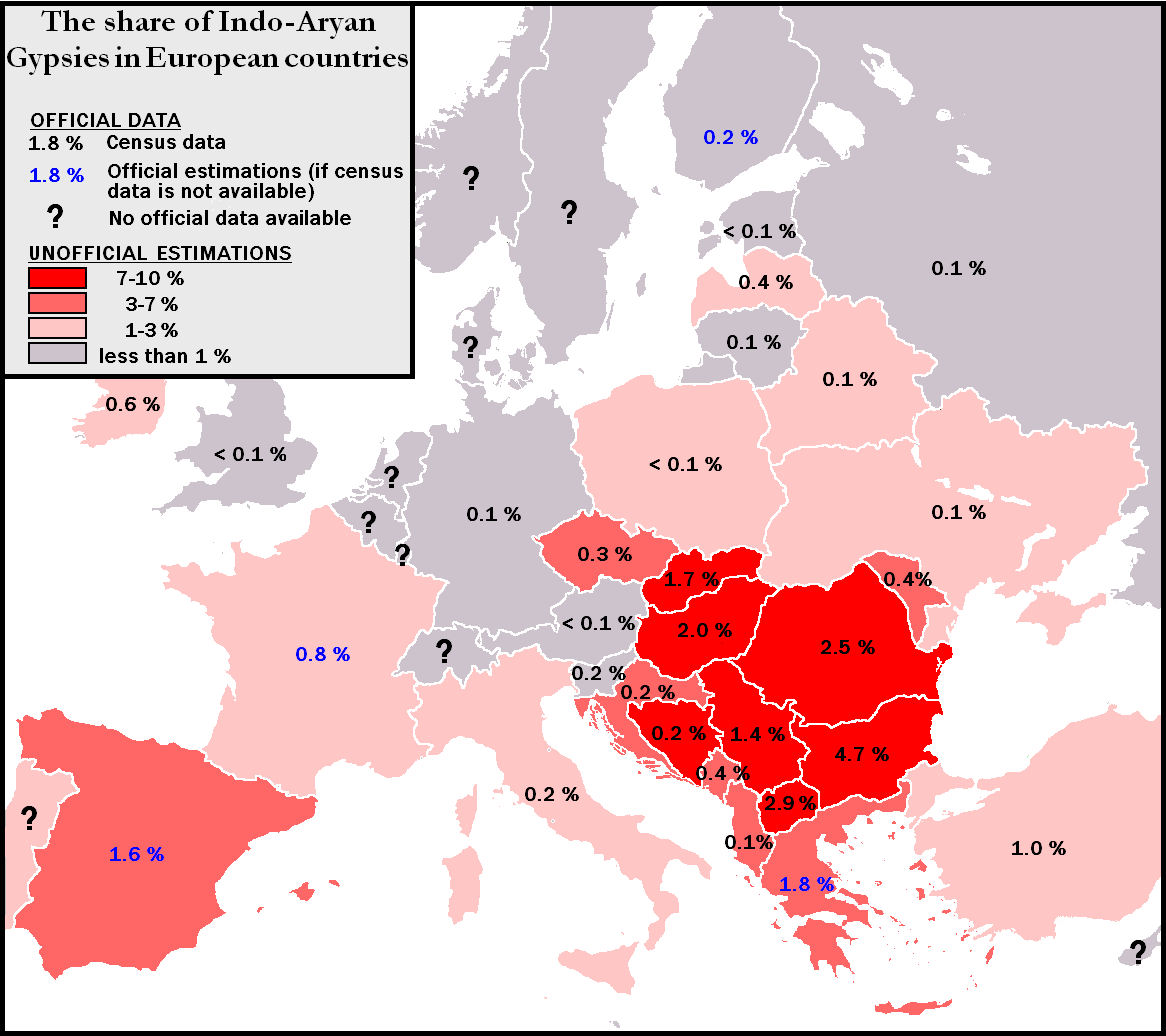
Is Bulgaria more tolerant towards roma? First of all - there are at least as many Roma in Romania or Bulgaria as in Central Europe.

(Picture belongs to Wikipedia Commons)
The first thing a new visitor in Sofia sees are horse carts with roma picking trash. Bulgarians don't do that. Roma don't work in offices. They live encapsulated, and are discriminated in numerous ways. Yet physical violence against Roma is rare, and very few Bulgarians would approve of it, in spite of a strong fascist presencein the parliament.

Anyone that has seen films like Time of the Gypsies or Gadjo Dilo, knows that the relations between Roma and the majority population is far from easy even in these countries


(Footage from Gadjo Dilo)

Yet, these tensions do not turn as nasty as in Central Europe, at least not for now.

Is the economical crisis more severe in Central Europe? Maybe it is. Bulgaria is hit late, and large chunks of the economy are not really for real. The crisis might also seem less critical if you fall from a lower level. (see GNP numbers above). But yet, this is a simplification worthy of dogmatic marxism. If unemployment and poverty in itself generated violence, there would be plenty of violence here. My own experience tells me the opposite.

Maybe the key to understand this kind of violent frustration is in the progress itself. Maybe it is Central Europe's higher GNP, and more developed societies that generate the violence?

We have seen in history how societey turns explosive not in times of absolute depression, but in time of rapid development. Consider the Russian revolution, the -60's or the french revolution. I don't think Bulgaria is remarkably tolerant towards roma. But there is probably a remarkable tolerance towards poverty here. The horse carts are still natural parts of Bulgarian cities. And the roma are still pleased with what they get.

If Bulgaria, and Romania, continues developing like the countries have done until now, which would be a wonderful thing, within a generation there would exist a generation of romas who go to university, and start asking for the same jobs as Bulgarians. That will be an explosive situation.

Friday, July 17, 2009

Invitation to climate action

For the nature invites to informal workshops on climate change. The workshops will focus on what you as a citizen can do, and will take place 24/7 in Smoljan and 1/8 in Stara Zagora. It is all part of the European Commission's climate change program that you can read about here. (English site)

Wired has a nice post on the topic... appearantly strange light phenomena, similar to Aurora Borealis are visible over the northern hemsphere. Beautiful, and most likely man made.


Sources: For the nature , Wired , Youtube

Thursday, July 16, 2009

About my government

As Klasa today offered pictures of Reinfeldt on the second page, I thought I might as well waste some words on my Swedish government.

I was slightly surprised when I saw that the Swedish government alarm about climate changes. High time, of course, but from what I remember from living in Sweden, no-one voted for Reinfeldt because he was an ecologist... In deed his party, Moderaterna, have been vigourously objecting everything said from ecologists since the environment became a political question back in the 70's. If that has changed, all is well, but I dubt it... I guess fight against climate change a'la Reinfeldt will mean money spent on nuclear energy.

Anyway, the reasons that one (I) actually could love Reinfeldt for was his pro-European stance. But how does this run with his support for Barroso. As you might know, the question about Barroso is not so much a question about values, after all Tony Blair is not radically different, but if the European Parliament or the National Governments hold the power in the EU... Personally I don't think Tony Blair would make a big difference. What would make a difference would be if the top EU positions are fought over in European elections, not appointed by governments, themselves appointed by parliaments.

Reinfeldt suddenly seem reluctant to hand over power to the parliament... And the formerly anti-european left are crying for more power to the European Parliament... Isn't ironic?


Happy charimanship, Reinfeldt!

Tuesday, June 9, 2009

Why I voted green

In the elections I, like many other Swedish citizens, voted for the Swedish green party. Inspired by Neyioten blog, where I could read both why Svetle would not vote for zelenite, and why she would vote for Sinjata Koalitia, I will try to explain why.

I am brought up in a tradition of democratic socialism. Most of my life it has been an obvious choice to vote for left leaning parties, but I have lately come to doubt that left wings politics (eternal growth + solidarity) are possible at all. The decline of parties like UK Labour and the continuous lack of innovative left wing thinking has made me lose hope in the ledt. And there is globalisation... Left wing politics require regulations, and how do you regulate production in China? Or Africa.

So why not face the facts and vote for liberals or center right? Because I neither belive in any eternal growth. The oil will finish one day. Maybe next year, maybe after fifty. But if there is oil for fifty more years, oil- and car companies will make us live fifty more years as if it would last for ever. Liberals and center politicians are way to weak when it comes to defending nature against private exploitation.

There are other issues as well. Like deregulating healthcare and schools, and then expect them to run as if the state payed them. It is difficult to make money from teaching. Private schools work excellent when they can pick their pupils, christian, muslims, ultra-rich... but they are completely useless in granting things like citizen's right to education. I might be wrong, but the only thing I have personally seen from deregulations is that the state pays the expenses for morally dubious enterprises. Deragulation can not be the answer to everything. But it's the only answer I get from Europe's center and liberal politicians.

So... I voted green. Because I hope they can work for a policy that finally take into account that we live on a planet. Ihope also that they can drive a development towards a much more local society, where we consume things hat have been produced locally to a much higher degree than today...

It will of course be a challenge to blog from my localy produced computer, but anyway... :) My reflections in this blog refer to European politics in general, or Swedish. I was not eligible for choosing between Bulgarian parties, and I am aware that my choice might, or might not have looked different is i was.

Monday, June 8, 2009

Congrats, zelenite!

If these elections had been about European questions, all Bulgarian parties could be pleased with the results:

Zelenite didn't make it to Brussels, but got around 1%. Not bad for the first time. The Greens did a wonderful election in Europe, and have better representation than before. There are more opportunties for green politics in the European parliament than ever.

The blue coalition did a good election,

and GERB won decisively. They both participate in the European people's party group, that wond decisively over the socialists.

DPS, the Turkish minority party defended themselves well. In the EU parliament the belong to the same liberal group as NDSV, whose Meglena Kuneva made an excellent personal campaign.

The Bulgarian socialists held their stance better than most comrades in Europe, though. Much better than Gordon Brown, for example.

In addition to this EPP have claimed that they want to create a "big coalition" together with the liberals and the socialists, to deny the far right, green and far left groups any influence.

Lider, another populist party made a surpirsingly good election and are surely happy about that.


Ataka woud rejoice, not only about their own position as nr. 3 in Bulgaria, but over the much larger far right group in the EU parliament. And they will get at least as much money from the EU parliament as UK's BNP gets.


Not so... In Bulgaria, as everywhere else in Europe, the EU elections are nothing but a final rehersal ahead of the real, national elections. Quite rightly so, as the commission, representin the national governments still holds gar more power than the EU parliament.

I don't think anyone reard themselves as winners in Bulgaria yet. It's pretty much like in the pause between second and third period in ice hockey...

There have been claims about votes being bought and sold. The blue coalition and Lider wants the votes to be recounted.(I will not comment anything on this on this blog before anyone is sentenced, since it is a very serious allegation.)

Gerb is leading... but from here it can only go downwards.
The Socialists now know that they are weaker than Gerb. Time is running out for hanging that.
DPS might be able to produce a similar result in the national elections. But if the Socialists don't form the next government they are toast.
Zelenite.. I don't know what they think about the result yet. But the chance to enter the parliament in these elections look small.
If these results were national, the Blue Coalition might well govern with Gerb. I would not send Bojko Borisov to in meetings Europe. Martin Dimitrov has a much more European and delicate image that wouldn't cause any scandals in Brussels. But if the blue coalition wants to influence Gerbs poltics, they will wnat to take as many voters as possible - compared to Gerb.
Lider and NDSV must bet on a coalition with someone, but with whom?

I guess Ataka has the least to worry about. They are not allied with any one, and might end up with 10-15% in opposition. A dream position for right wing populists.

In the end - in politics everything can and will happen. Less than 50% voted in these elections, so there is plenty of room for surprises.

Sunday, May 17, 2009

European

The European elections are coming up, and so far things have gone as planned for the Bulgarian "alternative" politicians. Parts of them stand behind Zelenite that have managed to raise money and will participate.

Other parts stand behind SDS that finally registered within the blue coalition, after the administrative court had its say.

The administrative court also ruled against the government's proposal to raise the entrance barrier for coalitions to 8 %. Obviously the government parties do not have power over this court, which is the highest Bulgarian court.

I guess I should take on a somehow broader perspective, after all these elections are not about Bulgaria, but about Europe. I have lived all my life closer than 200 km from the EU border which i guess gives a certain perspective... From this border it is very clear that EU very soon has to understand what it is and what it it not. To put things clear - should EU have a common policy against Russia? Or another issue, that will be increasingly pressing - what should the relationship be between the EU and Turkey?

This kind of question will not be decided in the European parliament, and I guess this is why quite few people bothers to vote. After all, the Swedish government's opinion in this matters weigh much heavier than the EU parliamentarians.


Tuesday, May 12, 2009

Casino...

The story about SDS - Blue coalition continues... I was away for a weekend trip to Paris. Last thing I read before i left was that SDS had expelled Plamen Jorukov because of his try to register SDS alone outside the blue coalition.
On the plane back i read in Standart that the eletoral authorities had registered Jurokov's SDS, and not the blue alliance. But Jurokov was not a member any more, right?
Anyway, today I read in dnes.bg that the administrative court, the highest legal instance have changed the decision and registered the blue alliance for the elections.

The European elections this is. I guess Bruxelles should rejoice over this proven stong interest in the European elections, as interest is waining elsewhere. The parliament has published a site with key issues in the elections, in order for people to know what they vote about. The list is more than vague with points like How should our food be grown? and How should we help balance family and career?.

The first question is no doubt relevant, but... do you sincerely believe that a parliament whith green parties had 51 % majority could turn central European industrial farms into small scale family farms, adopting a regional self sufficience? I don't think so. What concrete politice measures are we actually supposed to discuss?

I also doubt that the European Parliament is the right instance to help me balance career and family. I might idealise the traditional social democratic societies at times, but for sure there should also the limits for the state.

The PR campaign for the EU elections has also been critizised in Financial Times' Brussels Blog and a view from the outfield blog. The latter adds literary beauty to the insights of the former.


Monday, April 27, 2009

Is the crisis coming to Bulgaria?

The much talked about international economical crisis has so far been invisible in Bulgaria, at least in Sofia. During the weekend, however, I personally spoke to some persons that spoke about increasing unemployment. Many international observers fear the effects of a jobs crisis in eastern and central Europe, fearing that it will raise the spectre of populism and hatred against minorities.

In Romanian Cotidianul I also read about an alarming increase in kidnappings in Bulgaria. Romanian media tend to be quick to report about whatever is not rigght in Bulgaria, but it does for sure not sound nice.

Hungary is on the front page of the New York Times today, in a feature article of violence against Roma people. And this film from slovakia, showing policemen humiliating roma boys has caused some outcry.


I hope the Bulgarians can keep it together. We're all in this together.

Tuesday, April 14, 2009

Joint Press Release by the Czech, French and Swedish Ministers of Foreign Affairs on the situation in Moldova

This is the Official EU statement on the situation,I have been informed from the Swedish foereign ministry

The EU Presidency Trio during their meeting in Sarajevo reiterated the messages contained in the previous EU Presidency statements on the situation in Moldova issued on April 7 and 8.

The EU remains ready to work with Moldova in accordance with European values and principles and is committed to further strengthen mutual relations between EU and Moldova. In this regard, the role of the EUSR for Moldova is essential.

For the EU it is essential to enjoy good relations with its neighbours. While understanding the complexity of the Moldovan-Romanian relations, we call on the Government of Moldova to resume normal relations with Romania.

We call on the Moldovan authorities to respect all constitutional freedoms and on all parties to refrain from any violence.

Wednesday, April 1, 2009

Bulgaria, EU, Europe, Moldova

Nicolae Popescu, Research fellow at the European Council on Foreign Relations (ECFR) in London and blogging for EUobserver critzises the Bulgarian president Purvanov's lack of commitment to the European Union and European standards in his last post.

What angers Popescu is Purvanov's defence of the totalitarian Azerbadjanian regimes right to mess with the electoral laws without European involvment. Purvanov has also chosen to make a state visit to my previous home land Republic of Moldova, the fact that drew my interest to Popescus high quality blog.

Moldova's president Vladimir Voronin not only calls himself communist but uses some good old tricks from 1989 when they seem fit. I wouldn't say that Moldova is a totalitarian country now, and it's definitely not communist in any sense of the word. Politicians give and take dirty tricks, but Voronins' tricks go well beyond most European standards. For example Voronin has arbitrarilly expelled 245 romanian citizens from Moldova, in fear that they might support his liberal opponents. In Voronin's mind Romanian and Liberal seem to be synonymes. I'm sure neither romanian liberals or their adversaries would agree on this...


One could point ut that the presidents job is to keep good relations with friends and foes, no matter where they stand politically. The time of Purvanovs state visit could have been picked more carefully though... Moldova is going to elections on 5th of April, and Purvanov's cosy handshakes with the communist president might seem like support of his political party. Likewise might the visit to the Bulgarian minority living in Moldova seem as a way to convince them to vote for Voronin.

Things just might be interpreted this way... Popescu interprets them this way any way. I am convinced he is not alone.

Purvanov's orientation towards the EU has been quite a hot topic in Bulgaria lately. When the country was freezing form the lack of Russian gas in January, Purvanov boldly declared his support for opening all Bulgarian nuclear reactors, no matter what Bruxelles would say. Two years before, the closing of one of the reactors was a compromise Bulgaria had to do to join the EU.

The EU-question is rather complex in Bulgarian politics. All parties pay lip service to European ideal, but the absence of a well defined European ideal gives room for very many opinions under this umbrella. There is also strand of nationalistic anti-EU thinking that not is limited to a certain parties, even if the ruling Trojka might be closer to this strand than the SDS-DSB opposition.

Purvanov is the most EU critical politician in public discussion. Bojko Borisov has chosen the EU stars as symbol for his party GERB. Prime minister Stanishev takes a lot of beating from Bruxelles, but he seems more than happy to take part in EU politics...

I don't think this hesitant attitude towards Europe is very unique for Bulgaria, but rather a Europan phenomenon.There is another great post on Euobserver about this, noting the ironic fact that the only truly european party is Declan Glaney's party Libertas, working to prevent the Eu from getting more influence over national states.

Read Popescus post
here
(English original)
or here
(Bulgarian translation)

Thursday, March 19, 2009

European support for center right coalition

The central right opposition in Bulgaria is currently forming a coalition ahead of the elections. The liberals SDS and DSB have agreed to cooperate, a decision that is supported by leading circles on the European People's Party, the conservative/ christ democratic group in the EU parliament.

The information comes from Andreas von Belov, head of Konrad Adenauer foundation in Bulgaria. He welcomes a cetner right government that is founded on SDS, DSB and Bojko Borisov's GERB

(As a reference: Swedish members of the European People's Party are Moderaterna and Kristdemokraterna)

Source: Martin Dimitrov's blog

Wednesday, February 11, 2009

The European Commission sides with the Bulgarian government

Through Swedish media I find out that the European Court of Justice has ruled against Irelands protest against Directive 2006/24/EC which proclaims that national authorities should store digital data such as your phone number and email adress for two years.

The Directive was adopted by majority vote, regarded as a matter of free movement within the Union. The Irish government, backed by other members states like Slovakia and Sweden, claimed that the Directive is ratter a matter of legal jurisdiction and hence needs to be adopted by all member states according to valid treaties.

Svenska Dagbladet , a pro-EU newspaper, in it's headline says that Sweden now is forced to adopt the directive.

The news is absent from the English speaking media I read on a daily basis, but German Die Zeit covers the topic and reports that a German civil rights group has asked a court to try if the directive is adaptable in the German constitution. Die Zeit also offers an highly critical Op/Ed. fearing for the EU citizens civil rights.

The Bulgarian version of this directive is one of the hot issues in the movement, especially in the organisations preoccupied with electronical rights like Elektronna Granitsa. What they fear is that this directive will be used to curb legal and peaceful but radical protest movements.

On Bulgaria e Nasha Sweden was pointed out as a good example of resisting the directive some weeks ago.


Friday, September 5, 2008

Europan Commission aggrees with Italy to register Roma families?

If you followed this blog, you might have read my earlier posts about the social situation in italy involving mainly Romanian romas and Berlusconi cops...

The Berlusconi have issued a set of laws aimed at limiting illegal immigration to Italy. These include the collection of finger prints, personal data, the possibility to expell EU-citizens for so-called security reasons, the possibility of detaining EU citizens for 15 days and the restriction of asylum seekers´ freedom of movement.

These means not only go against what I presume a broad majority of world citizens accept as human rights, but also the EU treaties, and Italy has gotten their share of anger from different Eu institutions.

However, today I read on a romanian news site, that the EU Commission and the Italian state has reached an agreement on a somehow less offending version. It´s horrible. EU is a system where the higher levels of political power has more power than in traditional parliamentary system. The only reason I could see for accepting that is that these higher levels shopuld stick to law and morale also in times when paliamentary politicians might be prone to compromises them in change for votes. In times like these for example...

I promise to dedicate this blog to this subject for a while ahead, and give you links in different languages as I found them.

P.s. Swedish readers might draw a parallell to the Swedish "FRA" law for supervising messages sent over the Internet, that also was accepted in a slightly less offensive version. FRA is bad, but this is worse...


----------------
Now playing: Fatima Spar und die Freedom Fries - W
via FoxyTunes